

Behind the Footage: A Journey Back to Cotton and Indigo with the Cơ Tu People, Cong Don village, 2024

The Beginning
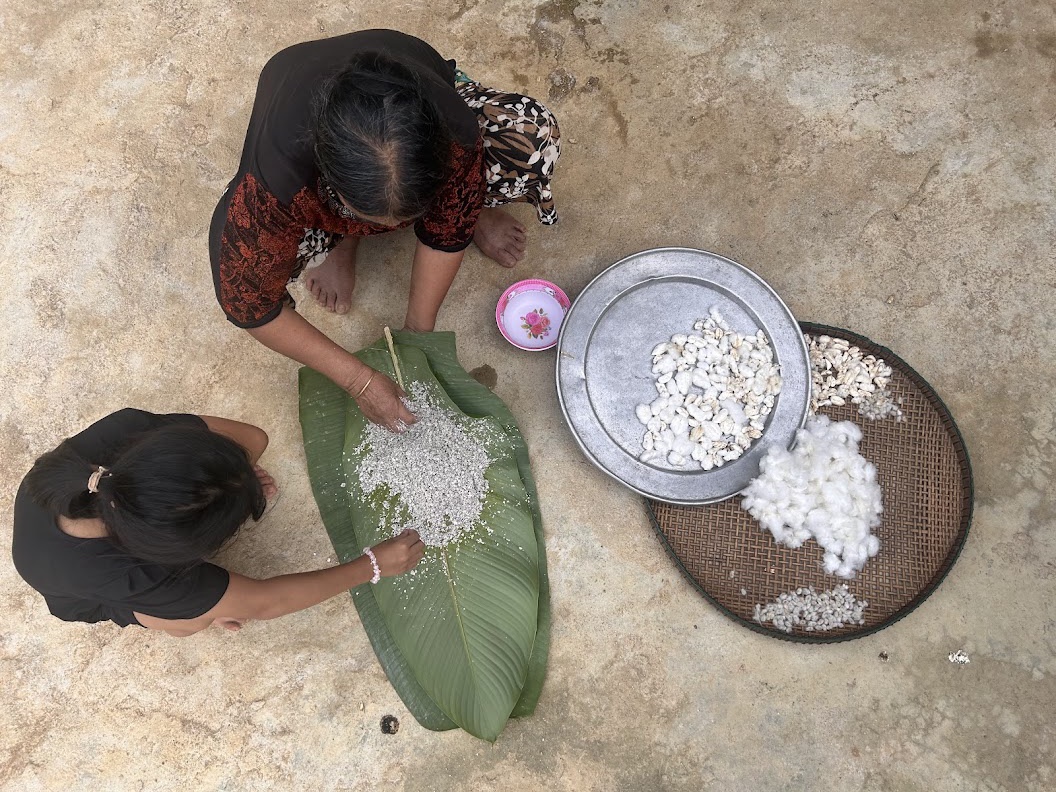
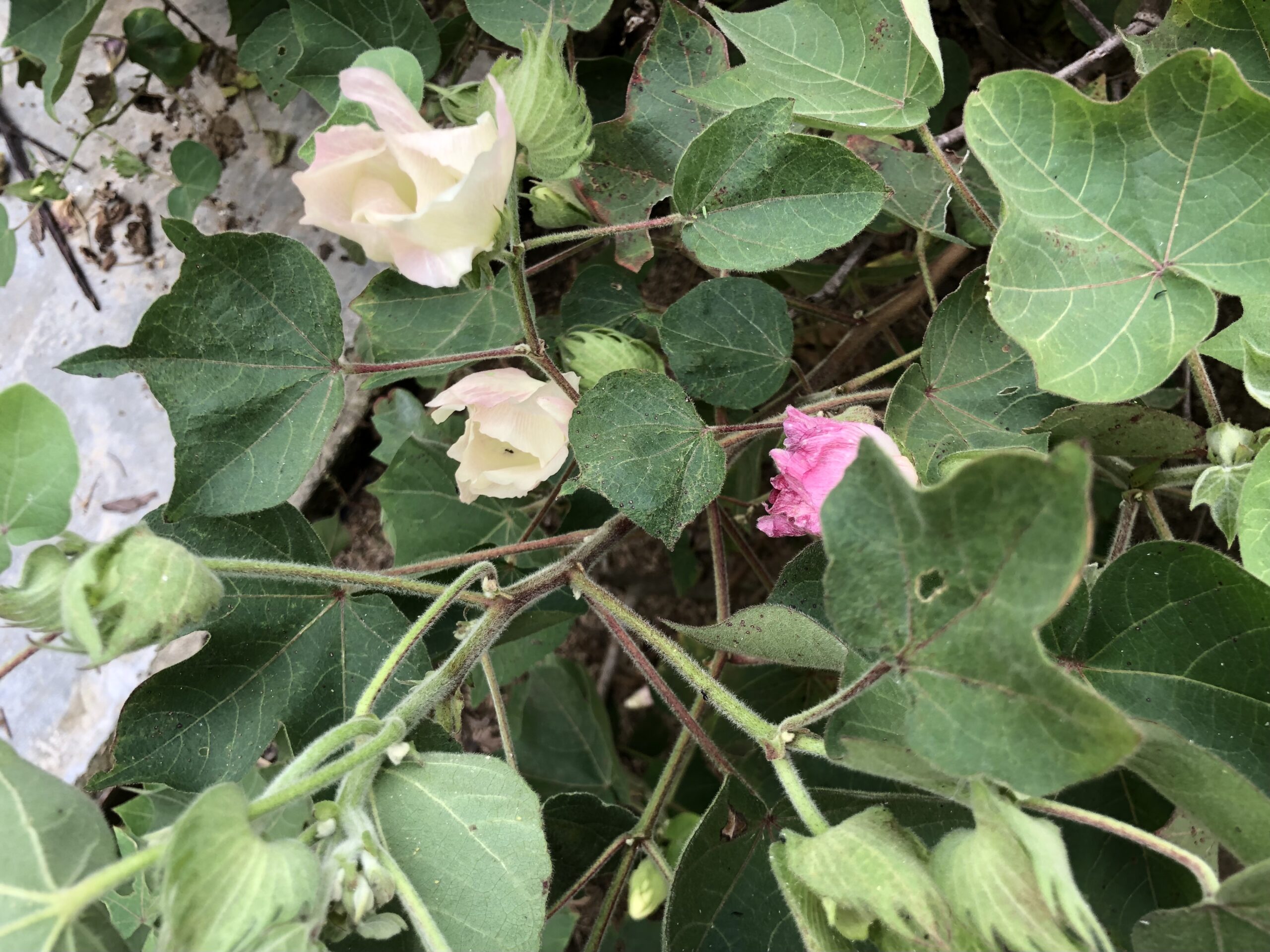
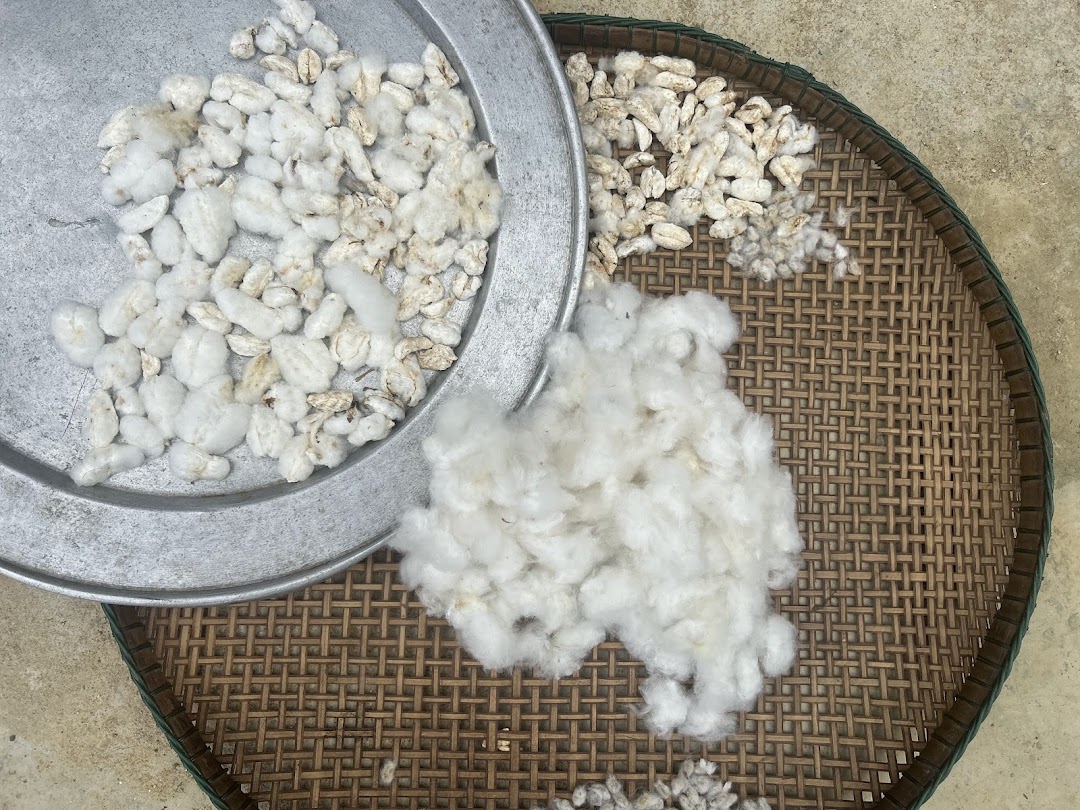
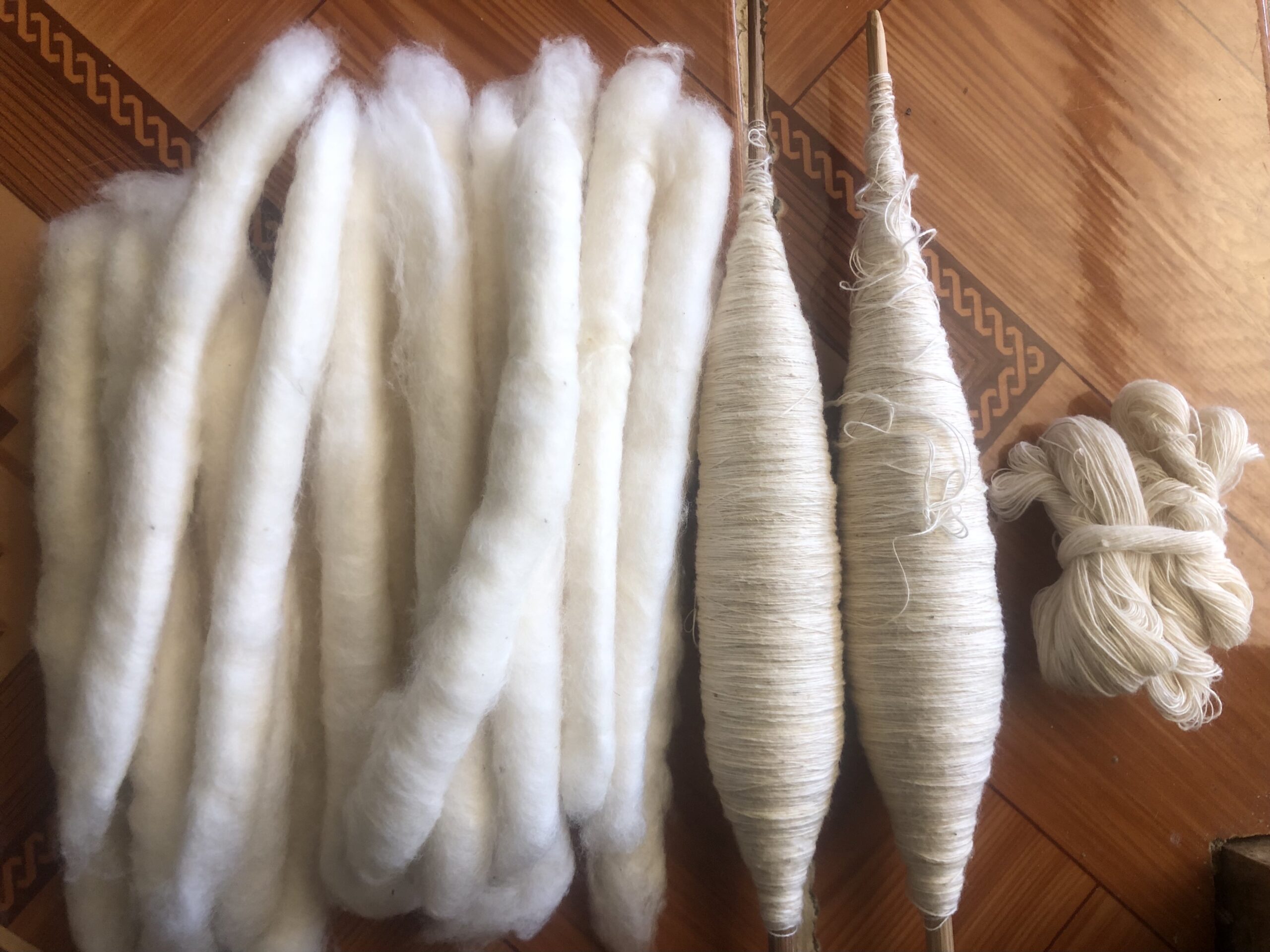
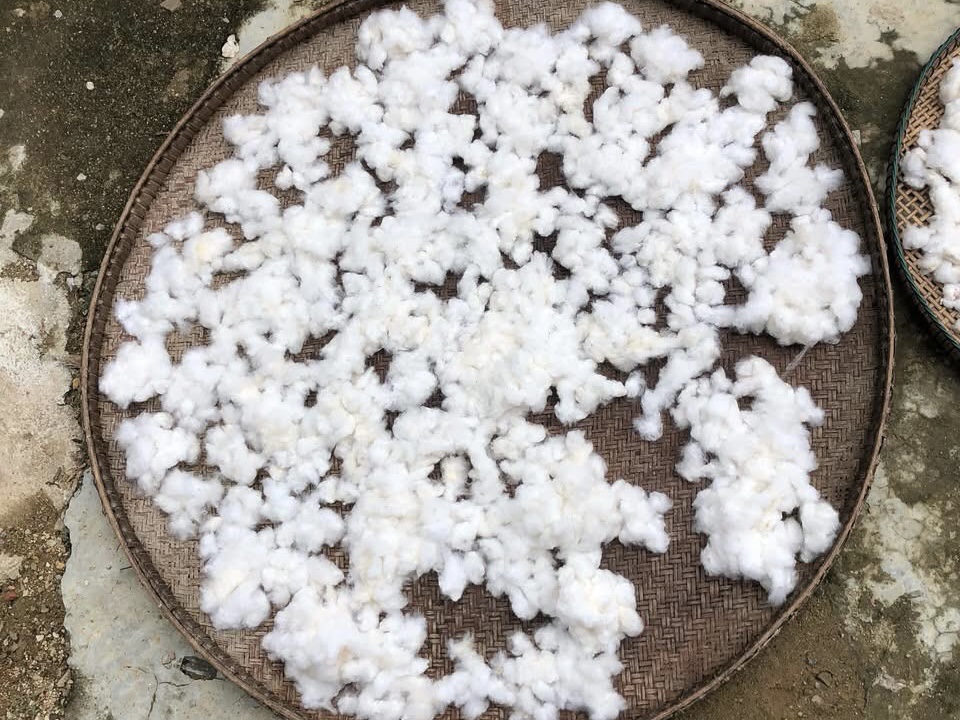
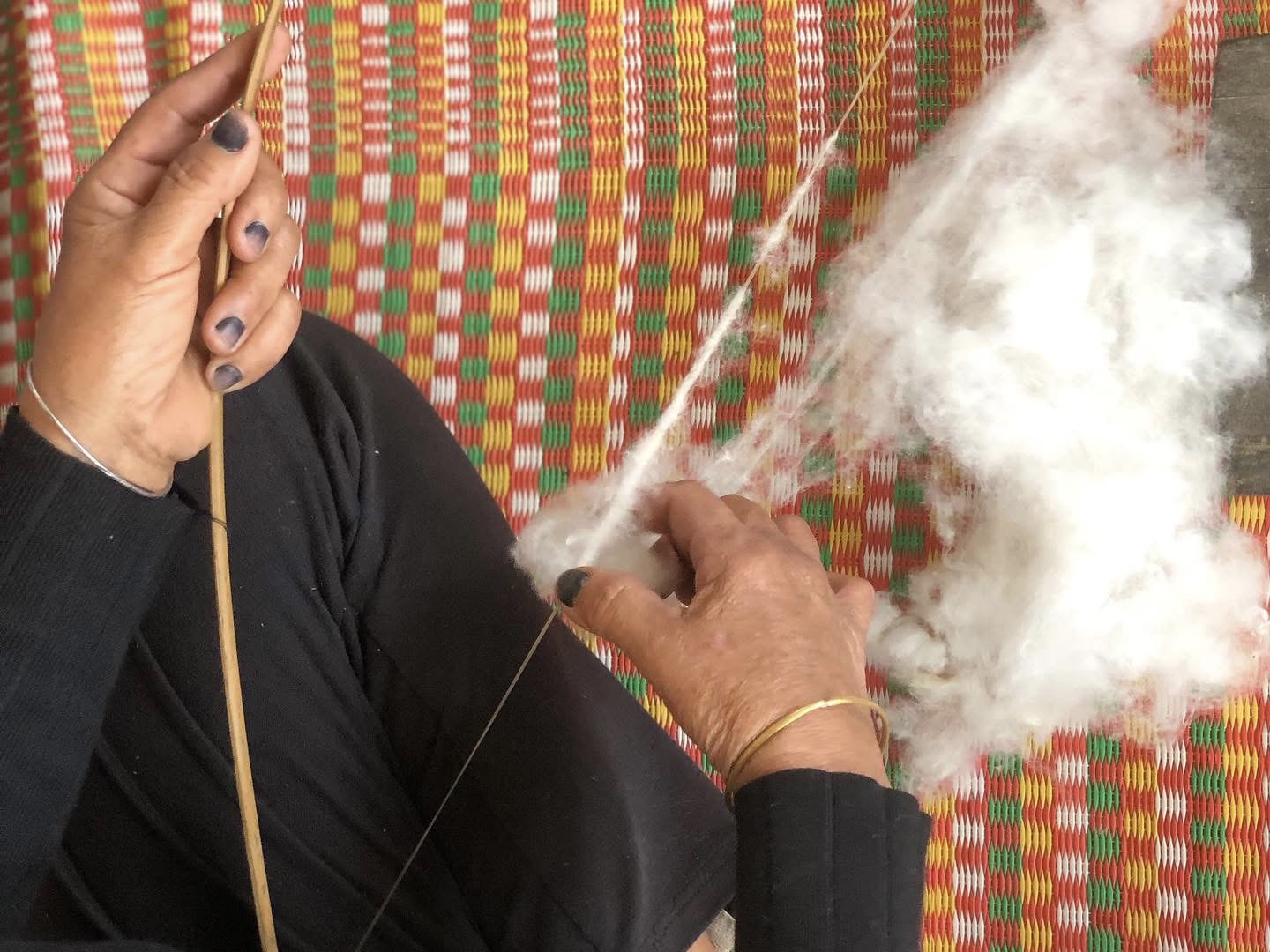
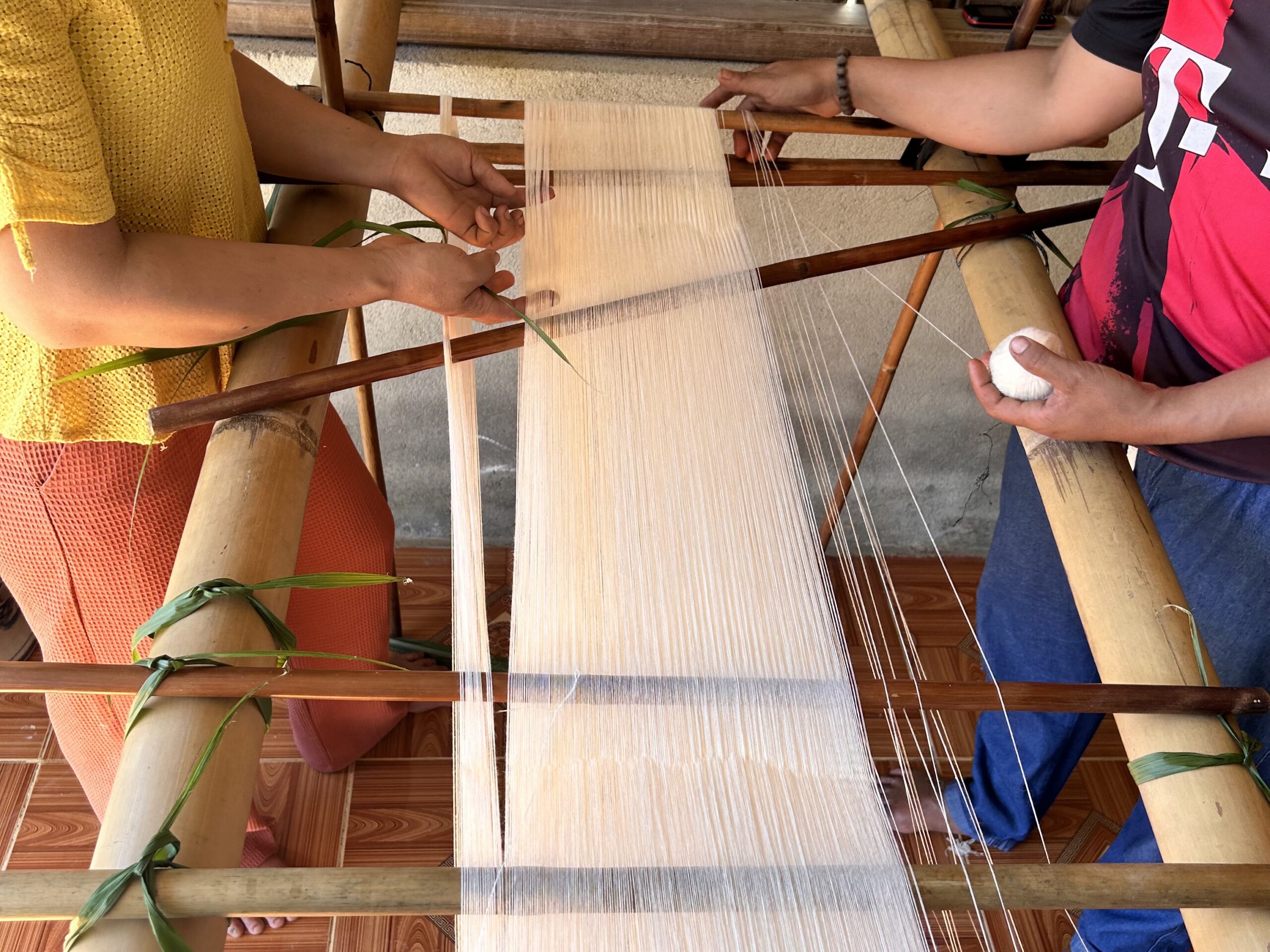
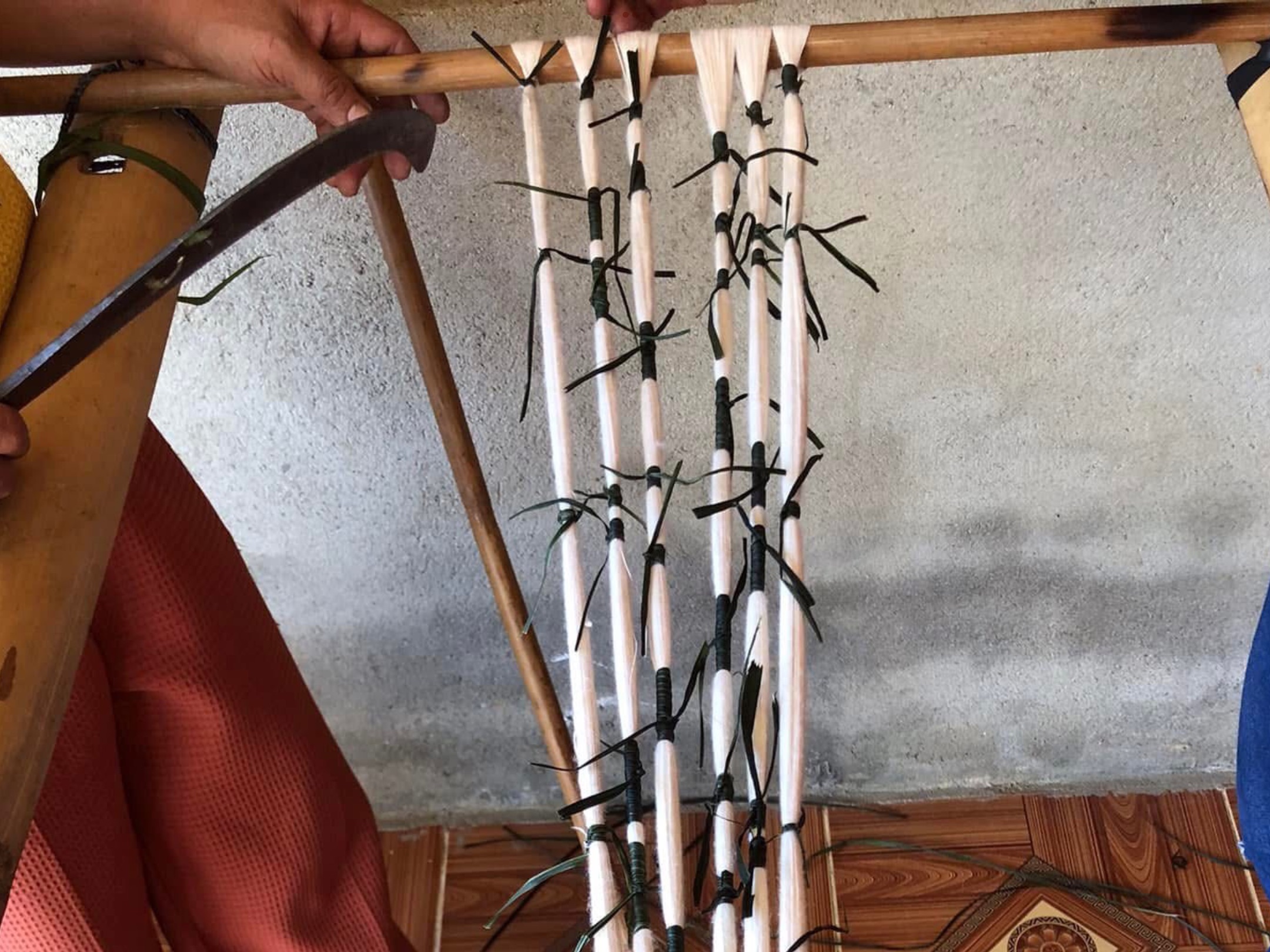
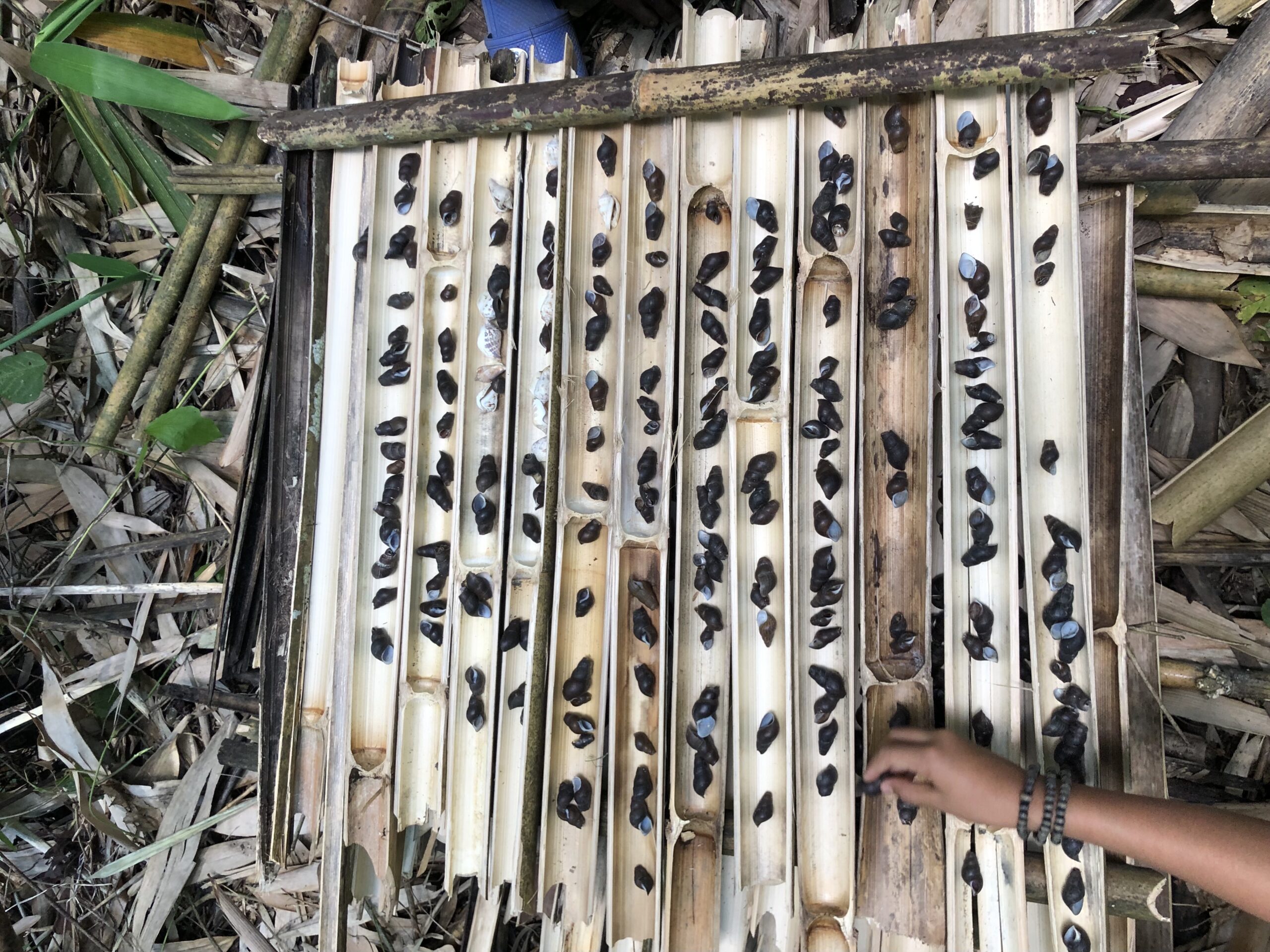
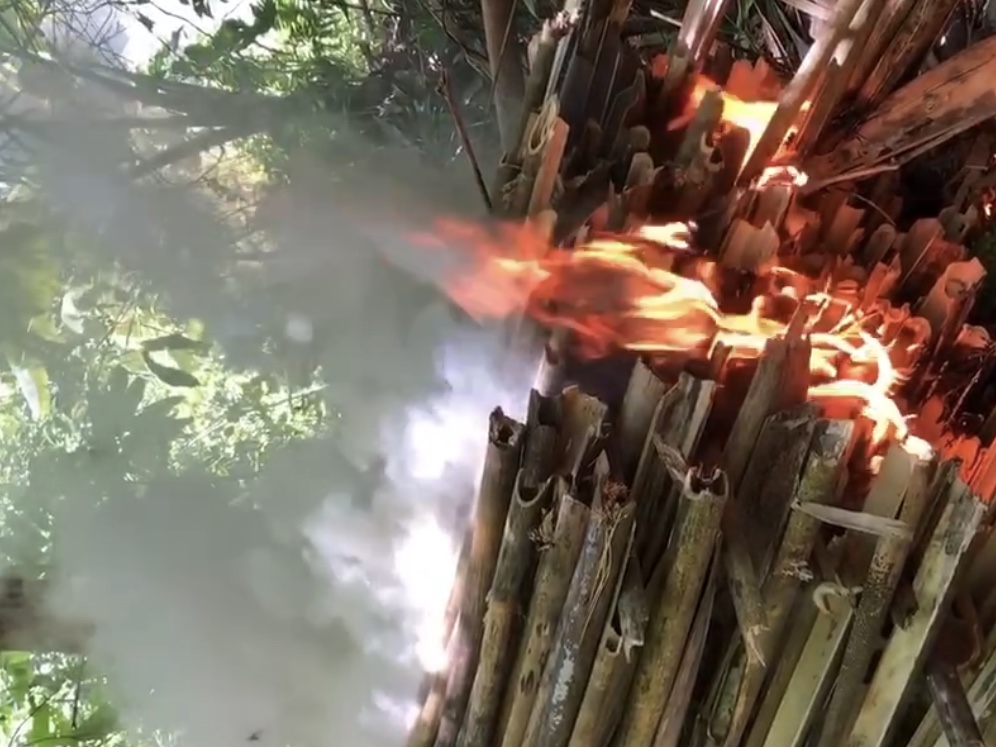
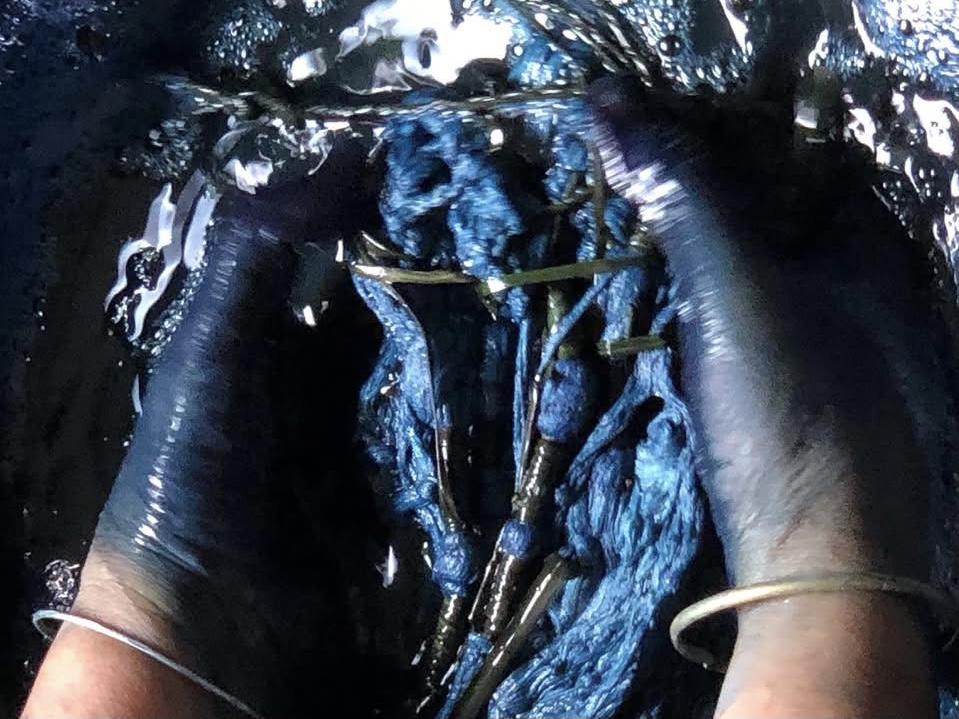
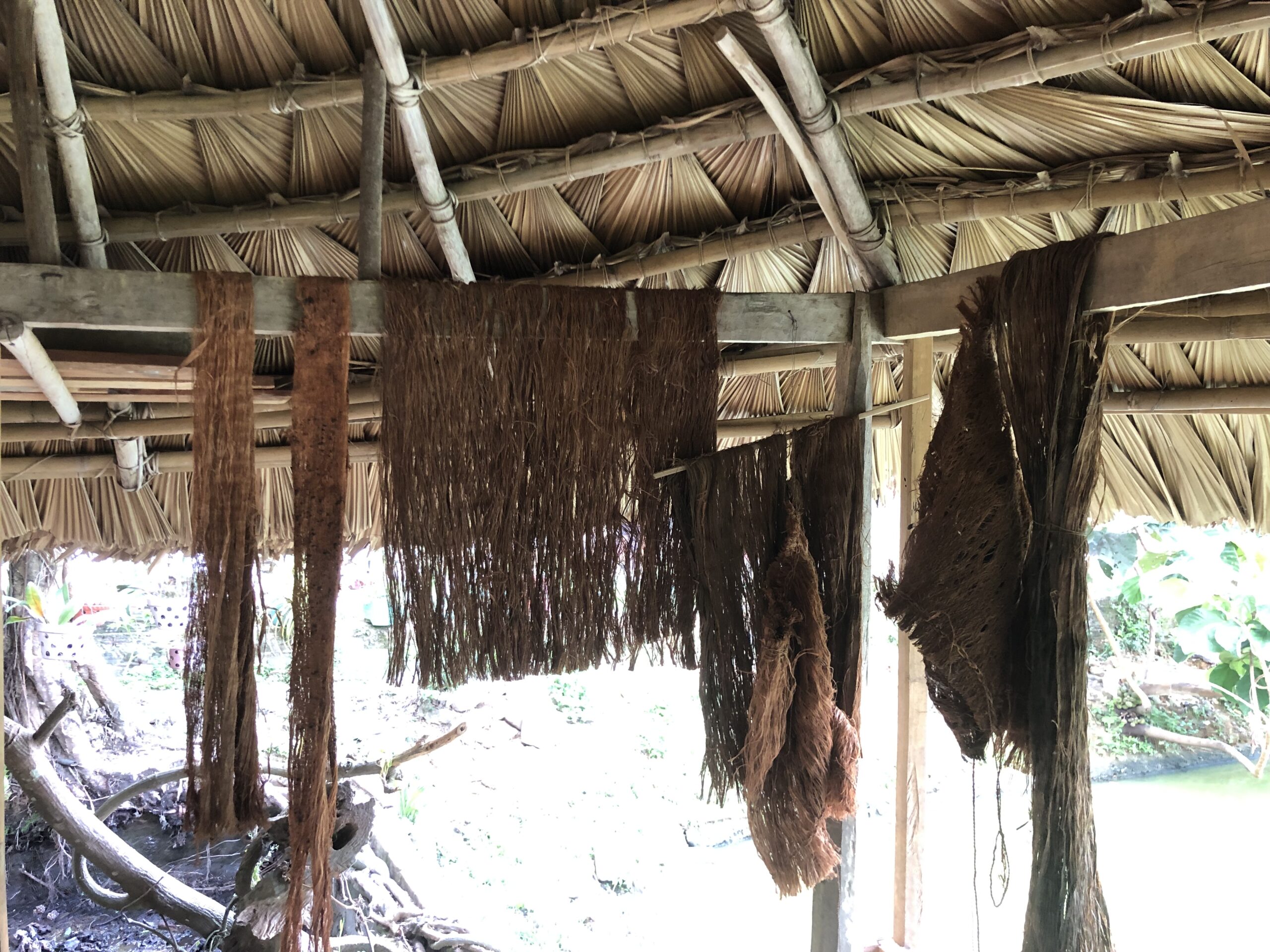
Not long ago, someone who was preparing the exhibition “Plants in Cơ Tu Cultural Life” at Da Nang Museum 2 (formerly Quang Nam Museum) messaged me to ask for permission to show a video I had filmed in Cong Don two years ago. They told me that the video was a rare and valuable document because it captured, in a vivid way, knowledge that was still very close to the original knowledge of the Cơ Tu people: growing cotton, spinning cotton thread, burning snail shells on bamboo tubes to prepare the indigo dye, and still using leaves to tie the warp threads before weaving ikat. They told me that 13 years ago, they had visited Surin, a village in Thailand where people were already using nylon strings to tie the threads. Here, however, people were still using leaves. That was something very rare.
That message brought back so many memories from two years ago. I started thinking again about how this journey had begun, the roads I had travelled, the people I had met, and all the emotions I had gone through along the way — the happiness, the frustration, the excitement, the uncertainty, and everything in between. I realised that I had never really written down the whole journey, or told the story behind that piece of footage. There were still things sitting inside me that perhaps needed to be written down. Otherwise, I would continue to feel that something was unfinished. The memories kept coming back to me. Time passes so quickly, and some things will slowly disappear if we do not write them down.
The Coincidence
It all started in 2023, when I had the chance to visit a Cơ Tu weaving village in Dhroong as part of a field research assistant on a research trip. I was particularly drawn to the weaving techniques and to the kindness of the people there. The bead weaving and coloured-thread weaving were incredibly intricate. But sadly, they no longer used cotton thread or made indigo dye. The older women used to know how to do these things, but they were now too old and weak to continue. I began to think about creating a workshop tour that would bring people to the Cơ Tu villages, not only to learn weaving, but also to learn about cotton, indigo dyeing, and older forms of local knowledge. I thought that if these things disappeared completely, it would be such a loss. After reading some articles, I learned about Cong Don, the only place in Quang Nam where people still grew cotton, made indigo dye, and, importantly, still practiced ikat by tying the warp threads to create a flowing, wave-like pattern. In 2024, when I learned about a small grant under the British Council’s Heritage Connection programme, I wrote a project proposal together with a small group of collaborators: Quynh, Phuc, Thang and Manh. They were designers, photographers and filmmakers living and working in Hoi An. The plan on paper was quite simple: over five or six months, we would make two field trips, organise a small showcase of films, photographs and new designs in Hoi An or Da Nang, and run a three-day workshop tour to the Cơ Tu villages of Dhroong and Cong Don. But in reality, so many things happened that were never part of the original plan.
On our first trip, we visited Dhroong to learn about the raw materials, take photographs and videos, and collect information. We then stayed overnight in Brohoong village, about 13 kilometres from Dhroong, at ACu Homestay. The next day, we visited Zơ Ra, where FIDR had supported the development of weaving products and community-based tourism. We had planned to continue to Cong Don, but the road was in very bad condition. It was raining, our vehicle broke down along the way, and, most importantly, I still did not have anyone to contact in the village. So we decided to turn back. Then, somehow, through a series of coincidences, my childhood friend Thao, who lives all the way over in the UK, helped connect me with Ha, a researcher at Da Nang Museum who was also doing her PhD and living in the same city in the UK as Thao. Ha then helped me contact Son, who worked at Quang Nam Museum and had many years of experience working with ethnic minority communities in Quang Nam. He agreed to join me on a field trip to Cong Don.
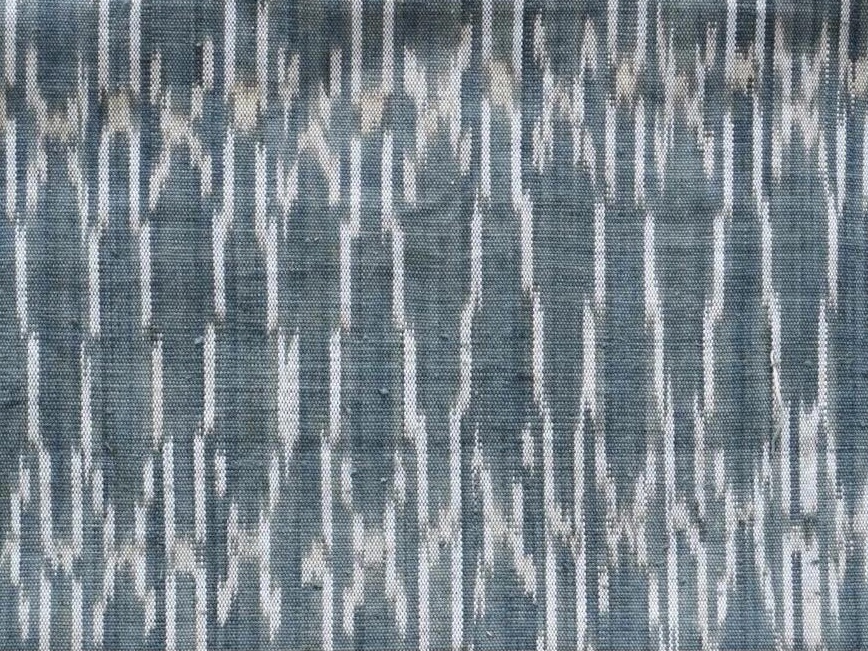
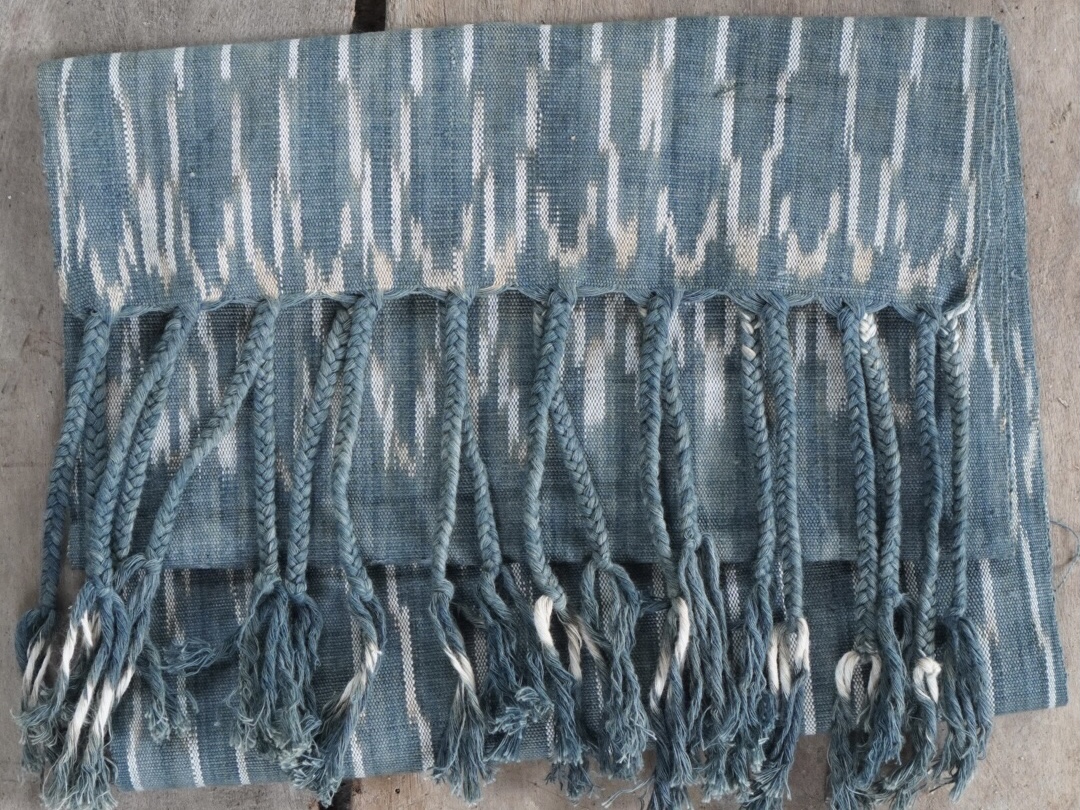
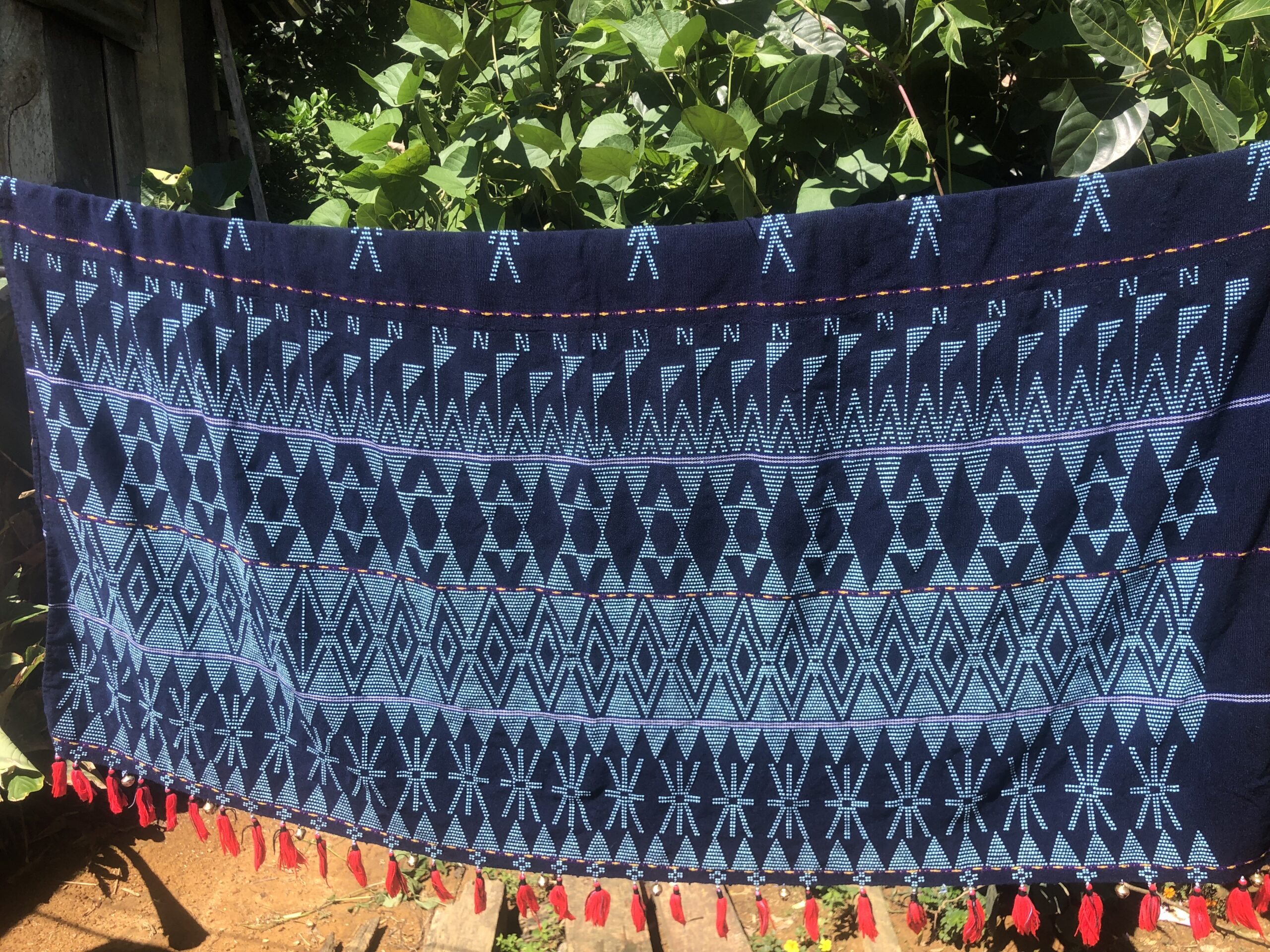
The road to Cong Don was much worse than I had imagined. The last 50 kilometres were especially difficult because of the heavy trucks carrying ore, which had badly damaged the road. Our first stop was the local People’s Committee office. We asked for permission to conduct our fieldwork and asked the local officials to help us meet people who still knew how to grow cotton and make indigo dye. That was where I met two older women, bà Bling Hia and bà Pá. Bà Hia showed us the cotton plants and pieces of cotton cloth dyed with indigo. Some were decorated with bead weaving, while others had the flowing ikat patterns. There were probably only a few people left in the village who still knew how to do this. Bà Pá was already very old and rarely dyed anymore. Bà Hia had only made indigo the month before, so there was not much material left. From the moment we arrived, the rain poured down. Bà Hia said we had to wait for the weather to clear before she could burn the snail shells. She was also suffering from back pain, and her children did not want her to work too hard. My only hope was bà Hia. The only way I could communicate with her was through Thuan, her daughter-in-law, who lived with her and could translate into Cơ Tu when necessary.
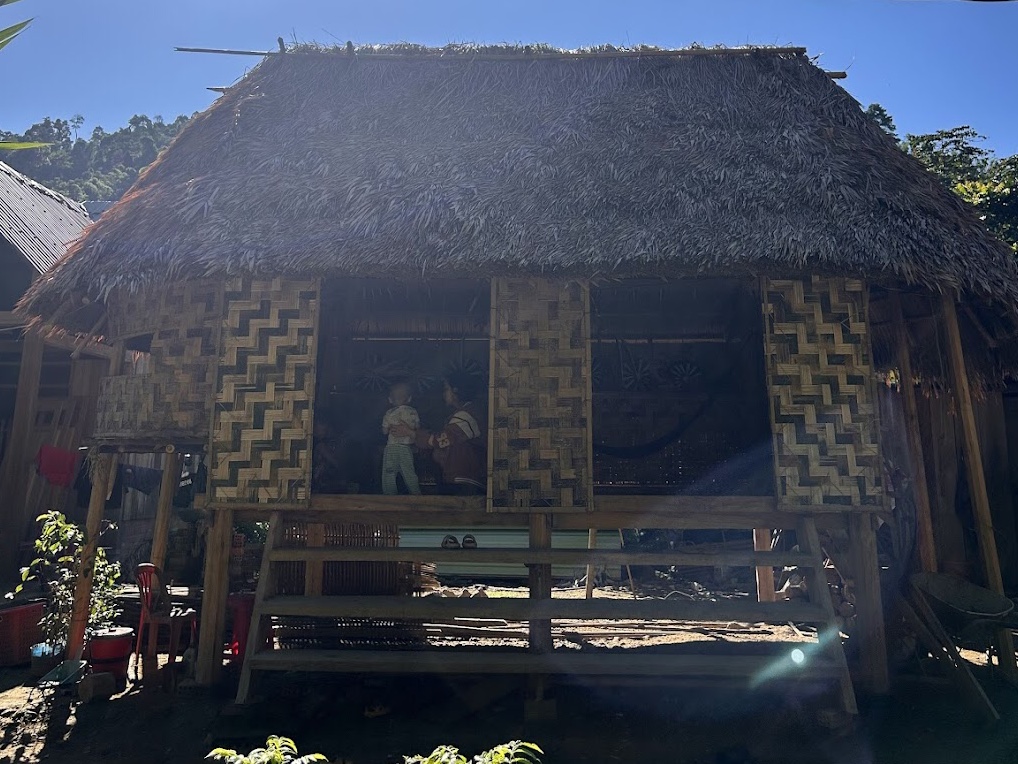
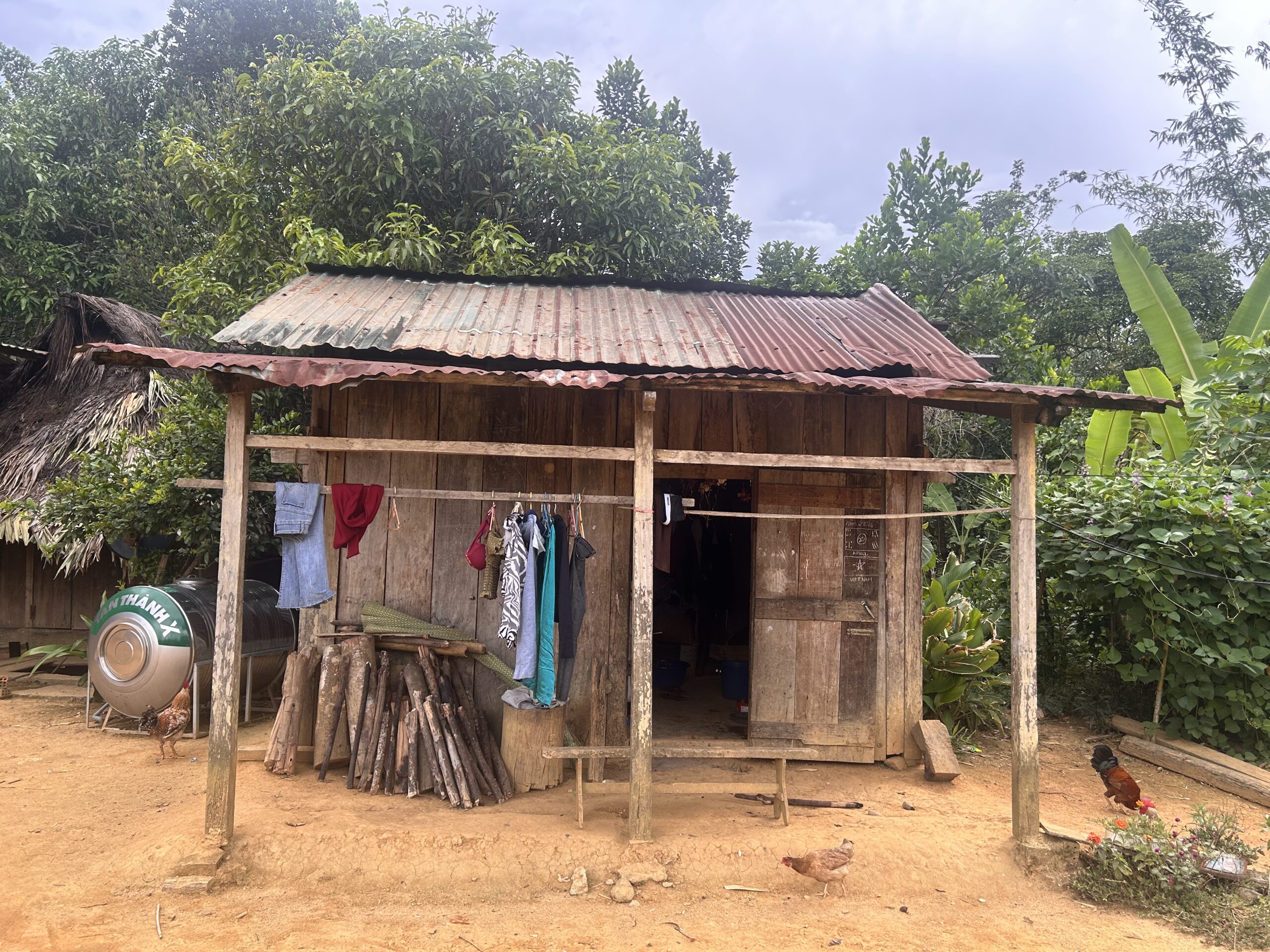
The trip also allowed me to meet Hanh, who cooked and helped with food at the People’s Committee, and her husband Hien, who also worked there. The three of us were the same age, so we quickly got along very well. Hanh told me that whenever I came back, I should stay at her house. Later, she invited me over to visit. There were still many places in Cong Don without electricity, and the phone signal was very weak. I use VinaPhone, and whenever I went up there, I usually lost the signal. There was electricity and Wi-Fi at the People’s Committee and at bà Hia’s house. Her son worked for the electricity company, so they had managed to install an internet connection. But Hanh’s house, about five kilometres away, had no electricity. At night, the whole family used just one solar-powered light. There were no homestays in the village. The only place to stay overnight was the accommodation for government staff at the commune office. If we wanted a guesthouse, we had to travel about 10 kilometres. On those winding mountain roads, through such a remote area, it could easily take an hour.
After the second trip, I felt quite lost. Our plan had been to make only two trips, but after those two trips I still had not actually seen anyone dyeing indigo. I did not know what to do next. Dhroong was much easier to reach, but no one there was still growing cotton or making indigo. Cong Don was far away and difficult to reach. There were still a few people who knew the techniques, but everything depended on the women’s health, the weather, and whether the materials were available. Whenever I felt lost, my anchor was the sea. I went to the beach every day. It was my own way of comforting myself. Then, through another fortunate encounter, I met a Buddhist nun. She lived alone on a mountain near a stream. She grew plants herself and often offered what she grew to other people. She invited me to stay with her for a few days, to give my mind some space. She cooked for me. I swept the yard, watered the plants and helped peel fruit. I told her about my project and how I did not know what to do next. She said to me: “What is meant to happen will come naturally. If it has not come yet, perhaps the time is not right. Just pray sincerely and ask the Buddha to show you the way. I believe in the Buddha’s miracles. I have experienced them in my own life.” After staying with her for a few days, I decided to return to Cong Don, even though I still had no idea what would happen.
The Miracle
I called Hanh and told her that I would take a bus from Da Nang to Cong Don. Hanh and Hien were away visiting her parents in Thach My. She told me that when I arrived around noon, I could wait at Cha Val junction. When they returned, they would pick me up and take me home with them. In my bag, I carried a tube of cotton thread and some indigo paste that Quynh had helped me buy. The bus moved as if it were dancing the lambada. The driver turned around, smiled and said: “This is the best way to travel here. You get to ride in a bus and go dancing at the same time. What more could you ask for?” I laughed. “You’re very optimistic,” I said. “The road is so bad. It must be exhausting to travel on it every day.” He said: “You get used to it. If I don’t travel, I miss it. I’ve been doing this for more than ten years. I know many of the passengers by face. Sometimes the bus breaks down or the road is blocked, and we have to wait until the next day to continue.” Luckily, I was quite used to travelling on mountain roads after spending two years in Dien Bien. Otherwise, it would have been much harder. I saw several people on the bus getting sick and vomiting. At least the mountains were beautiful. I thought you did not need to go anywhere to look for clouds here. The clouds were already floating beautifully over the mountains.
I arrived at Cha Val junction around noon, after about five hours of travel. Luckily, there had been no traffic jam or road blockage that day. While waiting for Hanh and Hien, I had lunch at a small restaurant at the junction. Many people were also waiting there for the afternoon bus back to Da Nang. From there, another 20 kilometres would take you towards the border with Laos. The restaurant was crowded at lunchtime. I heard people speaking Cơ Tu. There were also some electricity workers who had come up to install equipment, and they were speaking Vietnamese, which I could understand a little. I felt like I had landed in the middle of a lively little mountain town — children crying, people laughing and talking everywhere. I also went to a nearby guesthouse to look at the rooms. If I ever brought a group here, I thought we could stay there. From Cha Val to Hanh’s house was about seven kilometres, and from her house to bà Hia’s house was five kilometres. After a while, Hanh and Hien arrived and took me home on their motorbike. Sitting behind the motorbike, with the cool mountain air blowing against my face, I suddenly felt much less tired after the long journey. As soon as we arrived at Hanh’s house, it started raining. Hanh and Hien quickly brought the clothes inside. Then Hien laughed and said: “Whenever you come, it rains. Rain is a good sign!” Two dogs came running to greet us. One was yellow but named Den, which means “black”, and the other was black but named Cun. Cun was gentle and friendly. As soon as I arrived, he wagged his tail and followed me around. Den was more indifferent.
Hanh and Hien both worked at the commune office, but outside work they also farmed, raised pigs and ducks, and sold all sorts of things. Hanh also knew how to use heated leaves to treat people’s aches and pains. She told me that an older female ancestor had appeared in her dream and given her this knowledge. In the dream, the woman had long white hair and showed Hanh how to heat leaves and apply them to people’s bodies to help poor people who could not afford medical treatment. Since then, Hanh had been burning leaves and applying them to people’s painful areas. She said that only people who had been given this gift could do it. In Cơ Tu, the plant is called “và vấc”. In Vietnamese, it is called “từ bi”. Hanh and Hien had two children. Their older daughter was studying at a boarding high school in town, while their younger son was studying at a middle school near the house. We had been back for a while when three others returned from the forest. Hanh told me they were workers from Dai Hung who travelled around doing forest work, collecting leaves used for making conical hats. They stayed in one place for about a month, and when the leaves ran out, they moved somewhere else. They woke up early, cooked rice, packed it to take with them and worked all day without taking a proper lunch break. Hanh and Hien felt sorry for them because they worked so hard and ate so simply, so they had let them stay at their house for about ten years. The room I stayed in was their daughter’s room, and I shared it with one of the women. Everyone here bathed in cold water. I filled a basin and carried it into the little bathroom built outside the house. The wind came through the gaps in the walls, making the water feel even colder. After I finished bathing, Hanh had already cooked dinner. She was constantly moving — feeding the chickens, pigs and ducks, cooking for the family. She did everything so quickly and naturally.
After dinner, we had some time to talk. Hanh told me how she and Hien had met when he was studying in Thach My. At the time, there were no phones and no means of transport, so Hien would walk to see her. When Hien was 19, he invited her to visit his family. At that time, there was no concrete road from Cha Val to the village. They had to walk along forest and dirt roads. It took them from morning until night to get there. Hien’s family was very poor. They did not even have a bed and slept on the floor. On the way home, Hanh told him: “Maybe we shouldn’t continue seeing each other. I can’t walk anymore.” Hien thought she meant that she did not want to be with him because his family was poor. Later, Hanh felt sorry for him and thought: “Being born into a poor family is not his fault.” So she decided to marry him because she loved him. When they were 21, Hien and his parents came to ask for her hand in marriage. They brought a cow with them and walked all the way from their home to Thach My. It took seven days. There was a road, but Hien’s family did not have a vehicle. They carried bags of rice, pots and cooking utensils, and along the way they would look for water, cook a meal and find somewhere to sleep. When Hanh first became a daughter-in-law, life was extremely difficult.
She also told me about some traditional Cơ Tu practices. In the past, women did not give birth inside the house. They had to go to a small shelter built outside. Men were not allowed to help. Only older women and mothers with experience could come to help with the birth. The umbilical cord was cut with a thin, sharp piece of bamboo rather than a knife or scissors. If the mother continued to bleed, she might have to stay in the shelter for a week, eating and sleeping there. If the bleeding stopped, she could bring the baby home after giving birth. Hanh’s mother had also given birth this way. When Hanh had her own children, Hien was still not allowed to help her because people believed it would break certain taboos, and he also felt embarrassed and uncomfortable about such things. Hanh told me that she felt very lonely at that time. Things have changed now. When her first daughter was still a tiny baby, Hien had to go away to study, so Hanh raised the baby by herself. Then the baby became very sick with a high fever. Hanh decided to ask someone to take them to hospital. The doctor told her that if they had arrived just a little later, the baby might not have survived. Hanh and Hien are the same age as me, but listening to their story, I felt as if they had lived through another era. They had been through so much.
That night we went to bed early because we had to get up early the next morning. It had been a long time since I had spent an evening without using my phone. I felt so free. I thought that if I ever wanted to give up my phone for a while, this would be the perfect place. There was no phone signal, no internet, no television, and no street lights from the city. Only the stars, the moon, and the weak light from a small solar-powered lamp. There were no sounds from phones or televisions. Instead, there was the quiet sound of the wind, the stream flowing beside the house, the dogs, frogs, pigs, ducks and chickens. It was like an orchestra of the mountains. I looked up at the sky full of stars and felt very small in the vastness of the mountains, the earth and the sky. Perhaps because there were no electric lights here, the stars seemed even more beautiful. I felt that coming back here had been the right decision.
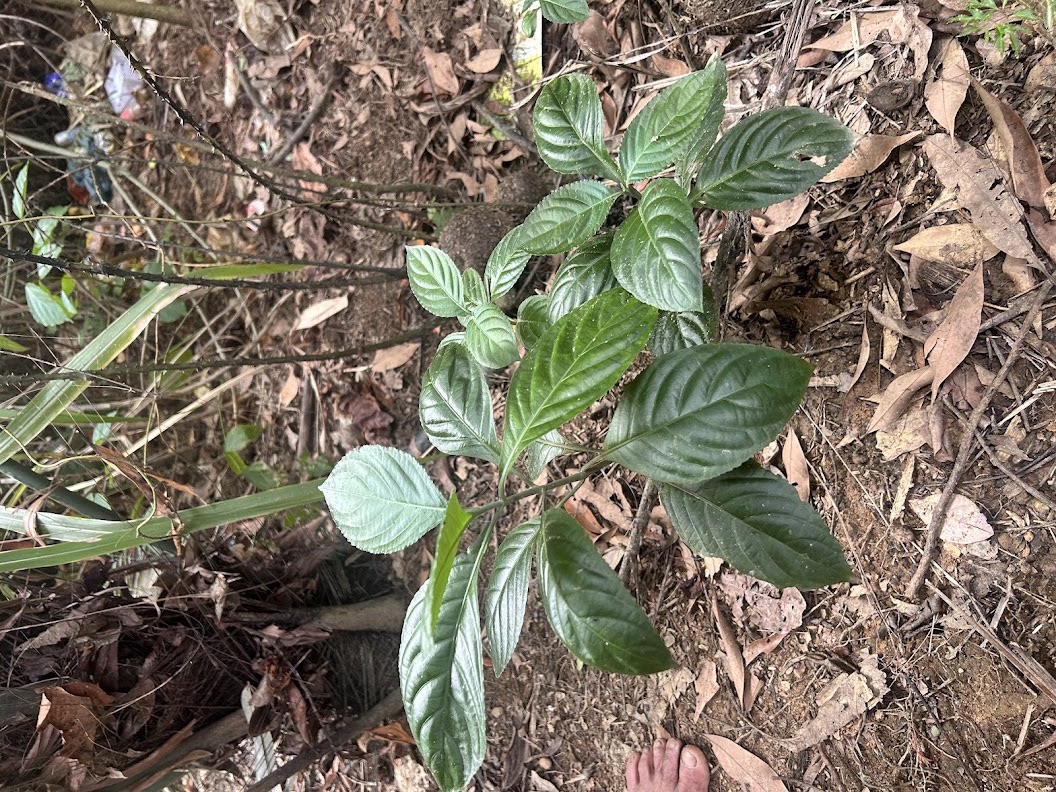
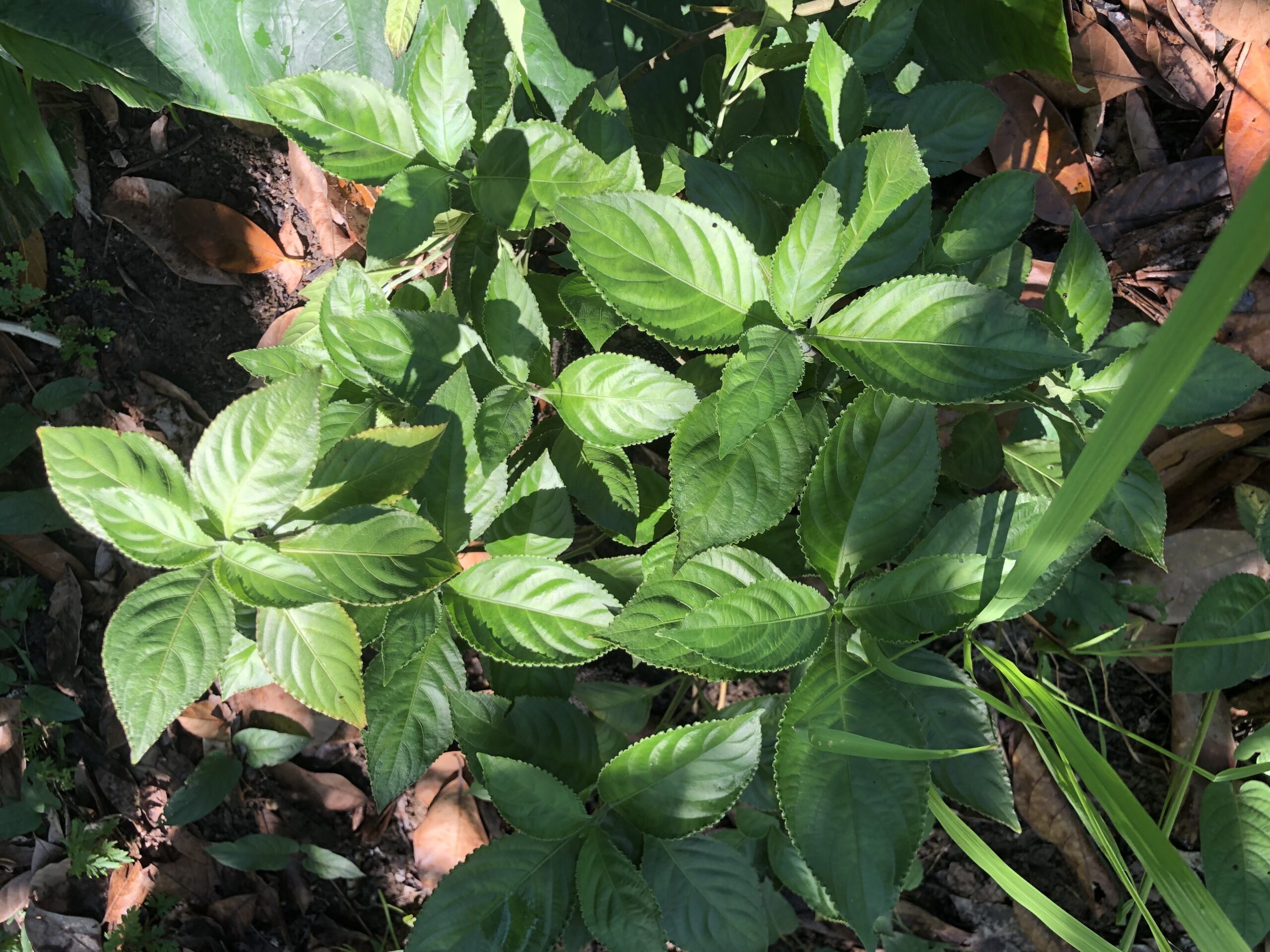
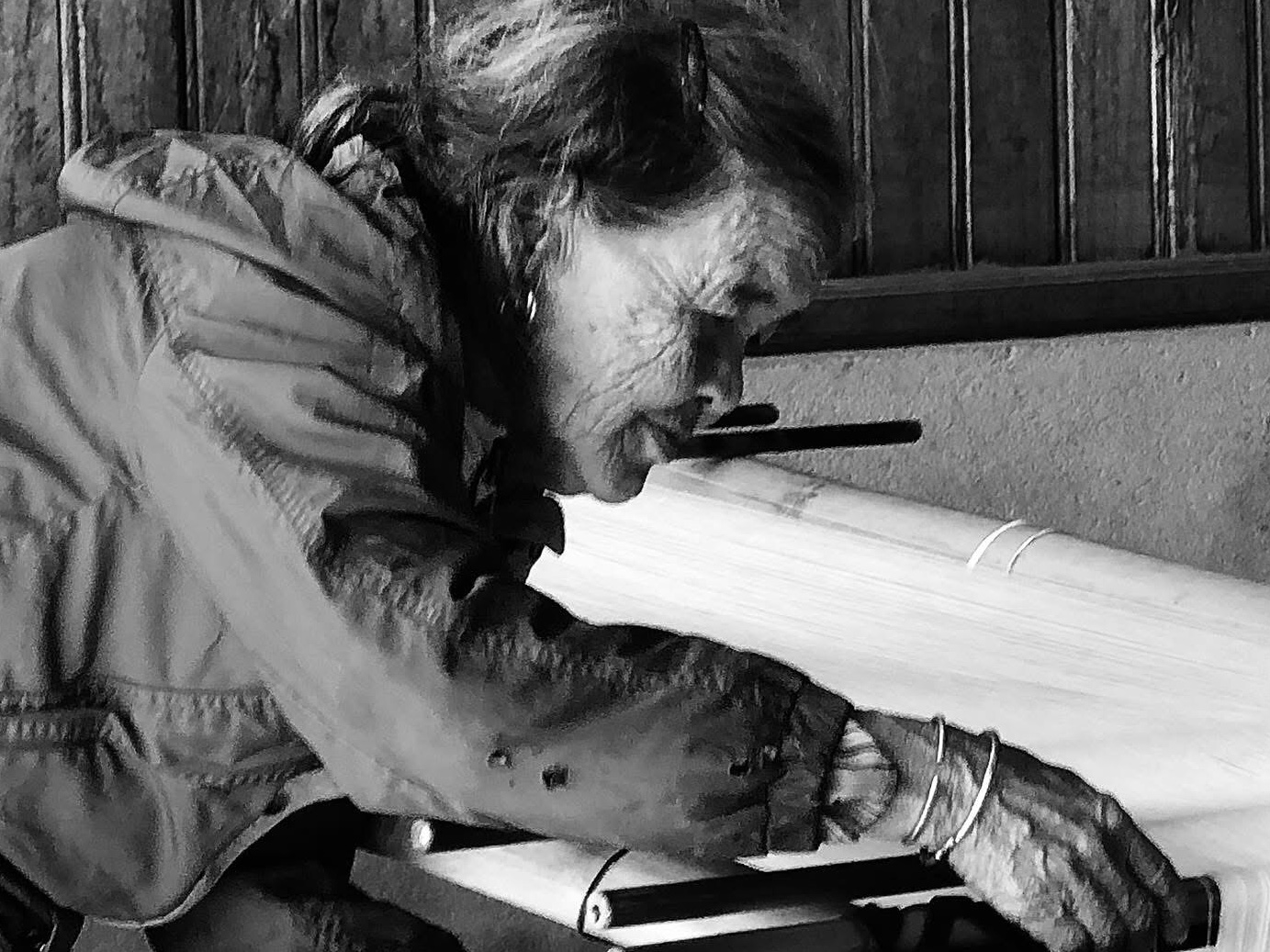
The next morning, I followed Hanh and Hien on their motorbike to work. Their two dogs would walk with them for a short distance to see them off, then turn around and go home by themselves. Hanh told me they were very clever. They did this every day—walking with them part of the way to work, then finding their own way home. We had breakfast and went to the commune office. I then borrowed Hanh’s motorbike and rode to bà Hia’s house. Luckily, bà Hia and Thuan were there when I arrived. I gave bà Hia the factory-made cotton thread I had brought. It was pure cotton. I also showed her the indigo paste. She looked at the cotton thread carefully. Cotton was very precious to her. She used to grow cotton, but each year she could only make a small amount. She touched the indigo paste, smelled it, and said: “Yes, this is tà ram.” The Cơ Tu people here did not traditionally make indigo into a paste like people in some other places. They dyed with fresh indigo, so the paste looked unfamiliar to her. I showed her a video of how people make indigo paste so that they can dye throughout the year, and how they prepare an indigo vat. Bà Hia told me that before her mother died, she had told her: “Don’t abandon kpai. Don’t abandon tà ram.” In Cơ Tu, kpai means cotton, and tà ram means indigo. Bà Hia remembered her mother’s words and continued the practice, even though her children did not want her to work because her back hurt and she was already old. She told me that she wanted to do it. Then she took my hand. She had seen me travelling back and forth so many times, and perhaps she felt sorry for me. She finally agreed to show me how she did it. I did not speak Cơ Tu, and bà Hia spoke only a little Vietnamese. Sometimes she said things that I could not understand. I could only try to feel what she meant. Thuan or My, bà Hia’s granddaughter, helped with the translation. My was on summer holiday from primary school and was staying with her grandmother. She was such a lovely little girl, always sitting close to her grandmother. So I asked her to come with us and help translate.
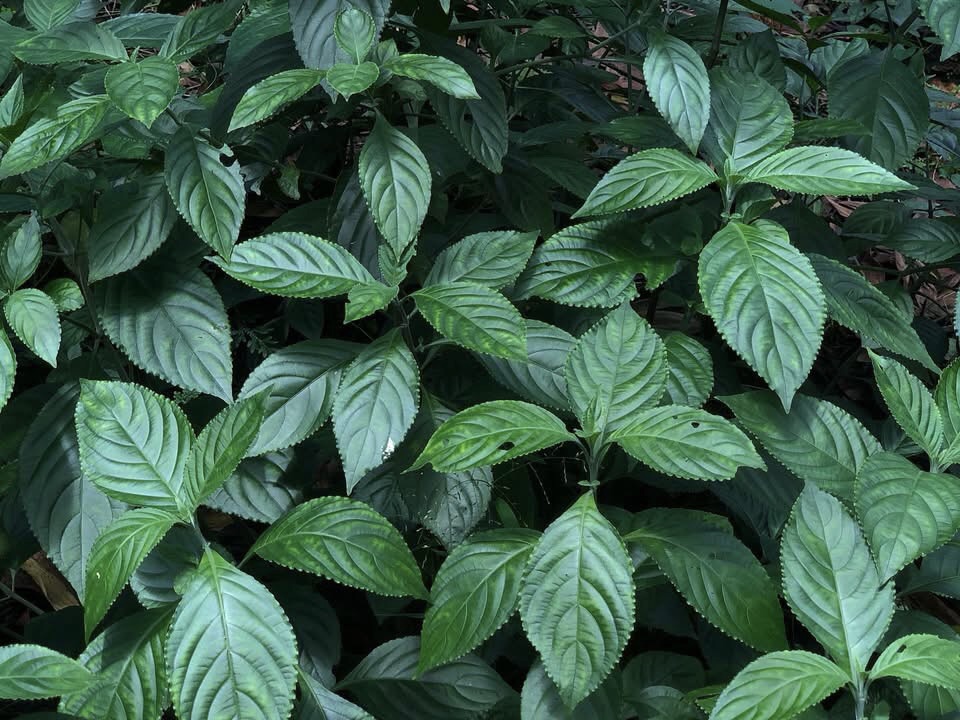
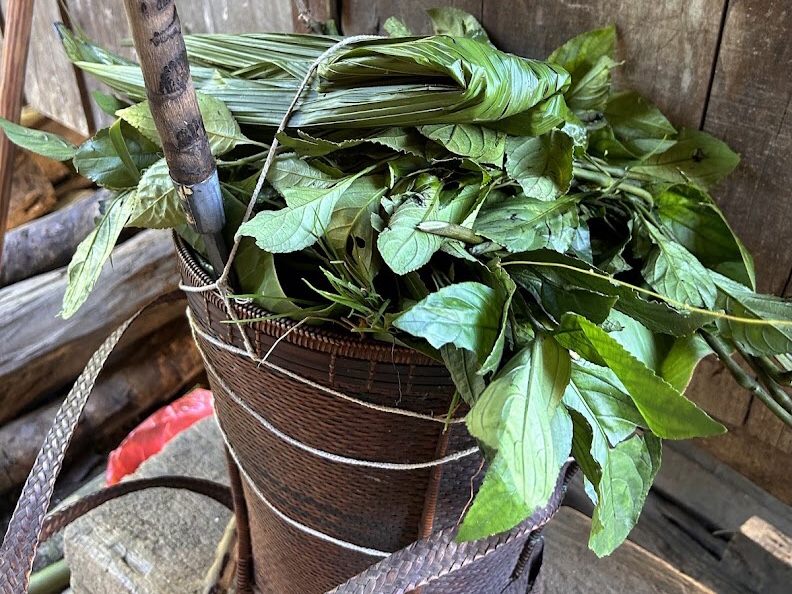
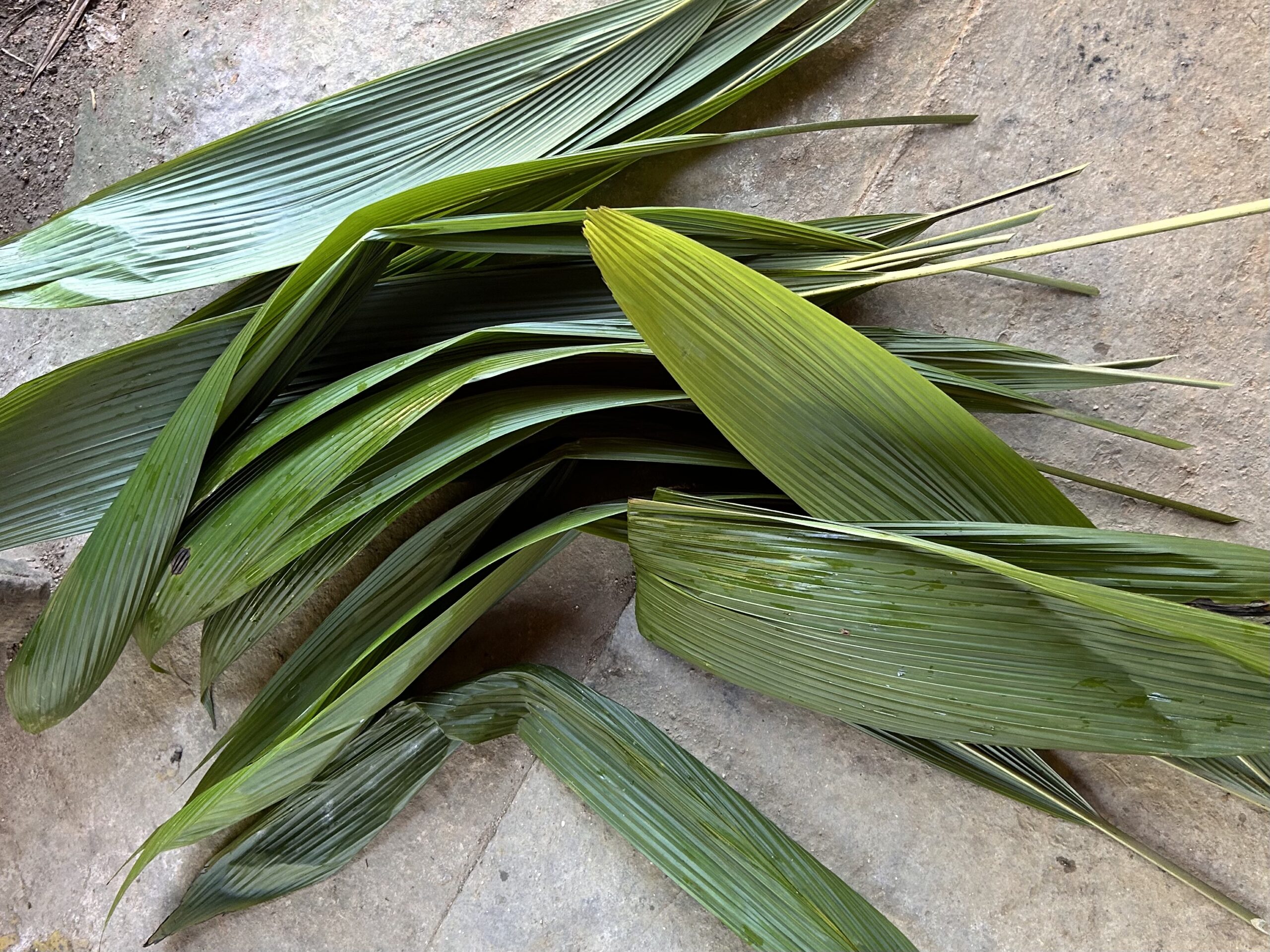
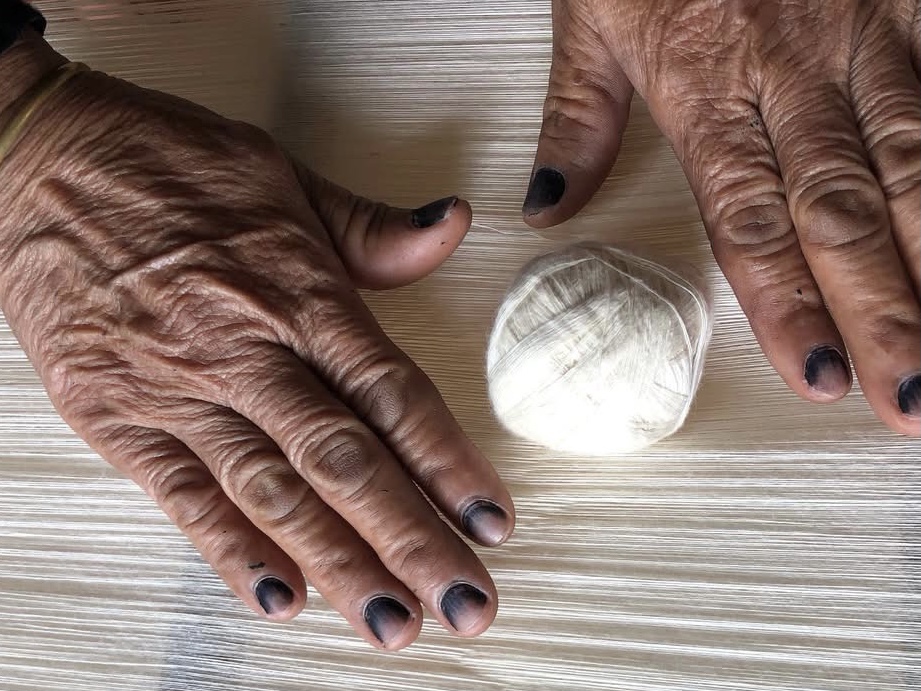
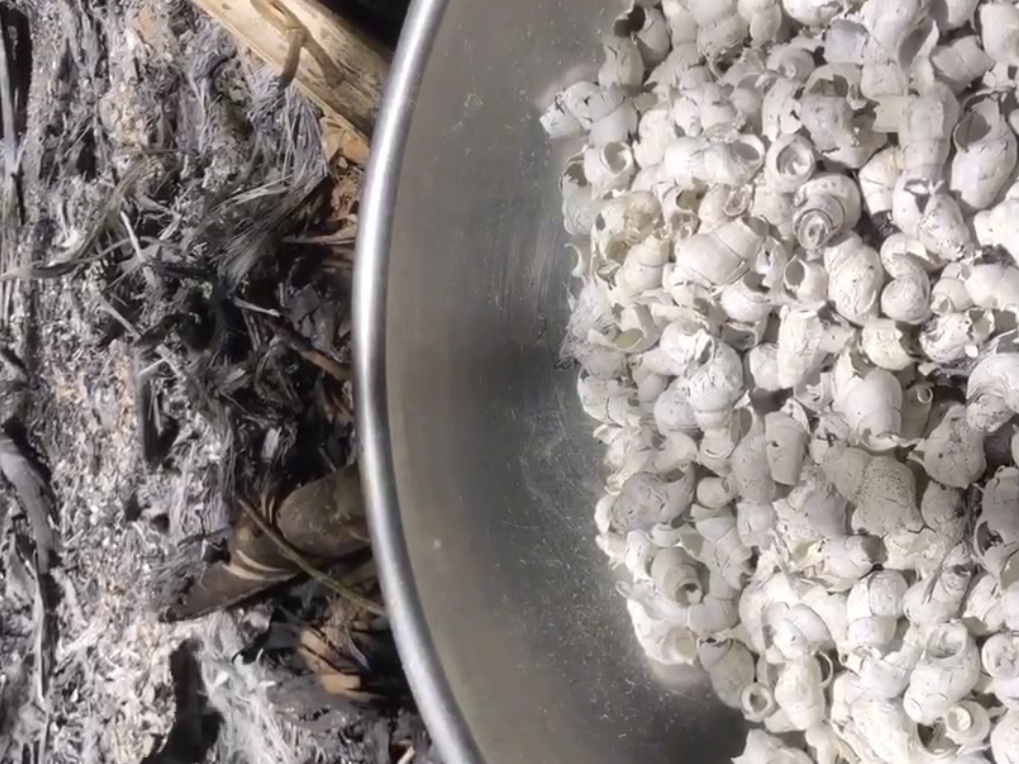
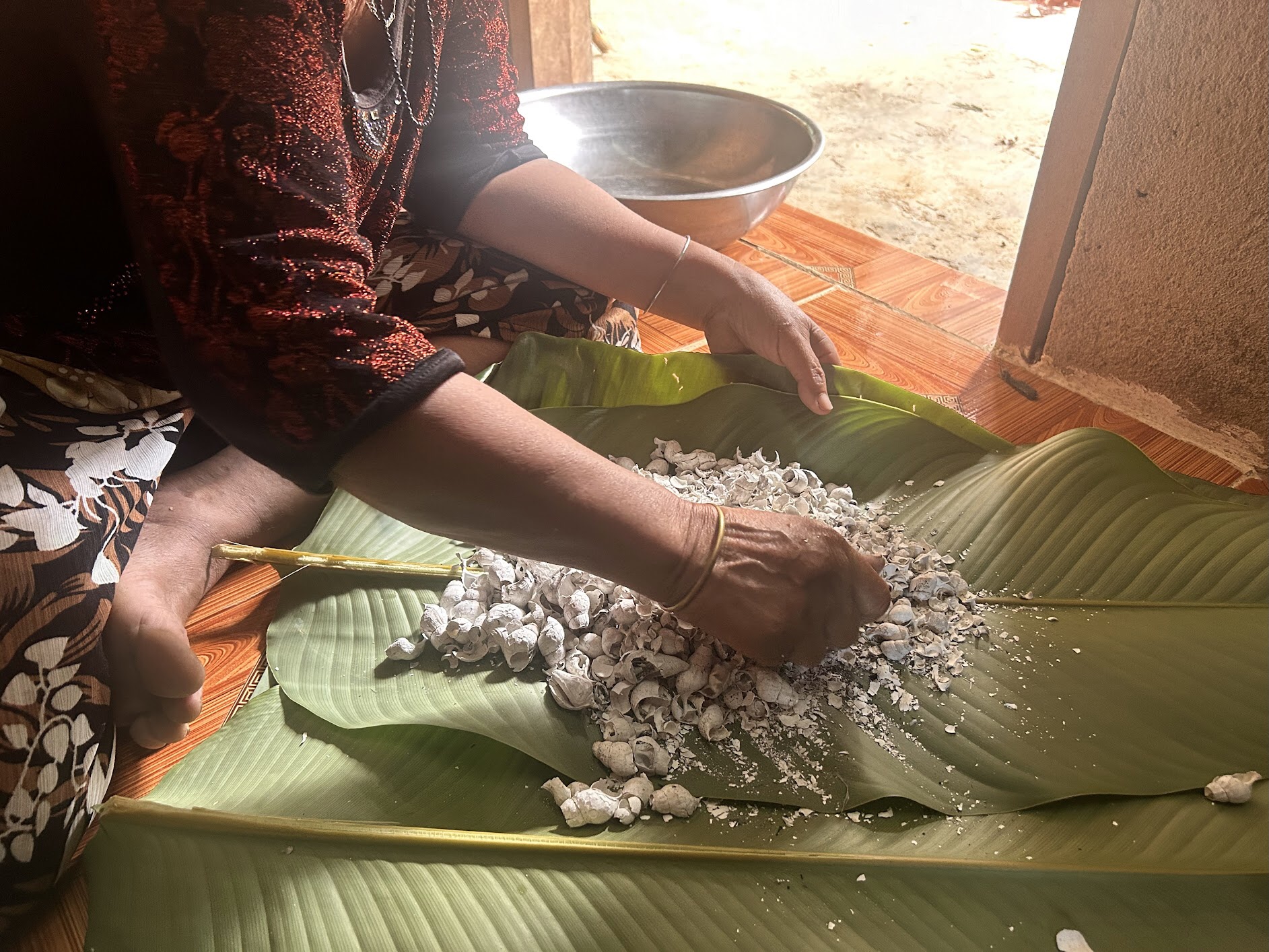
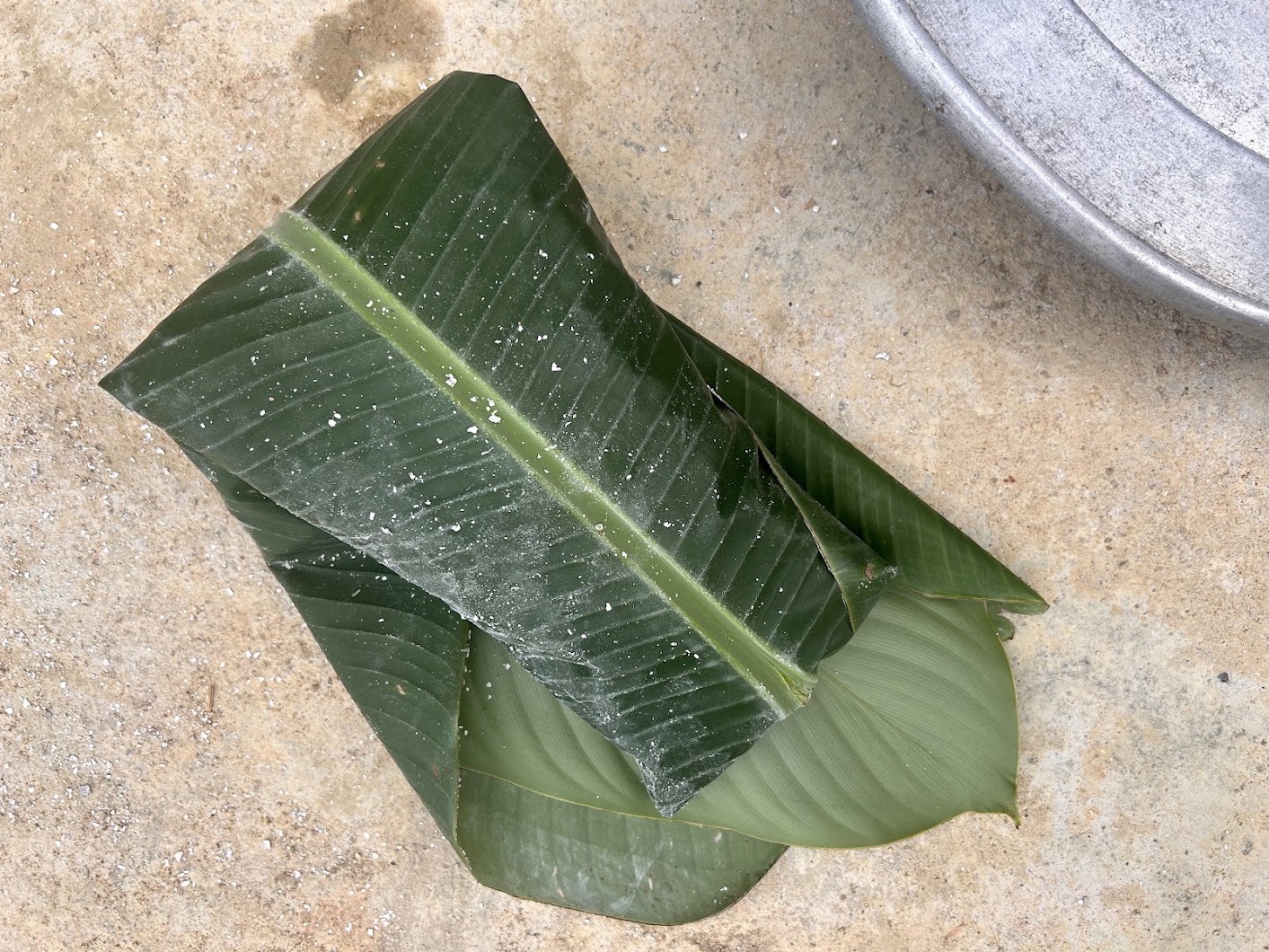
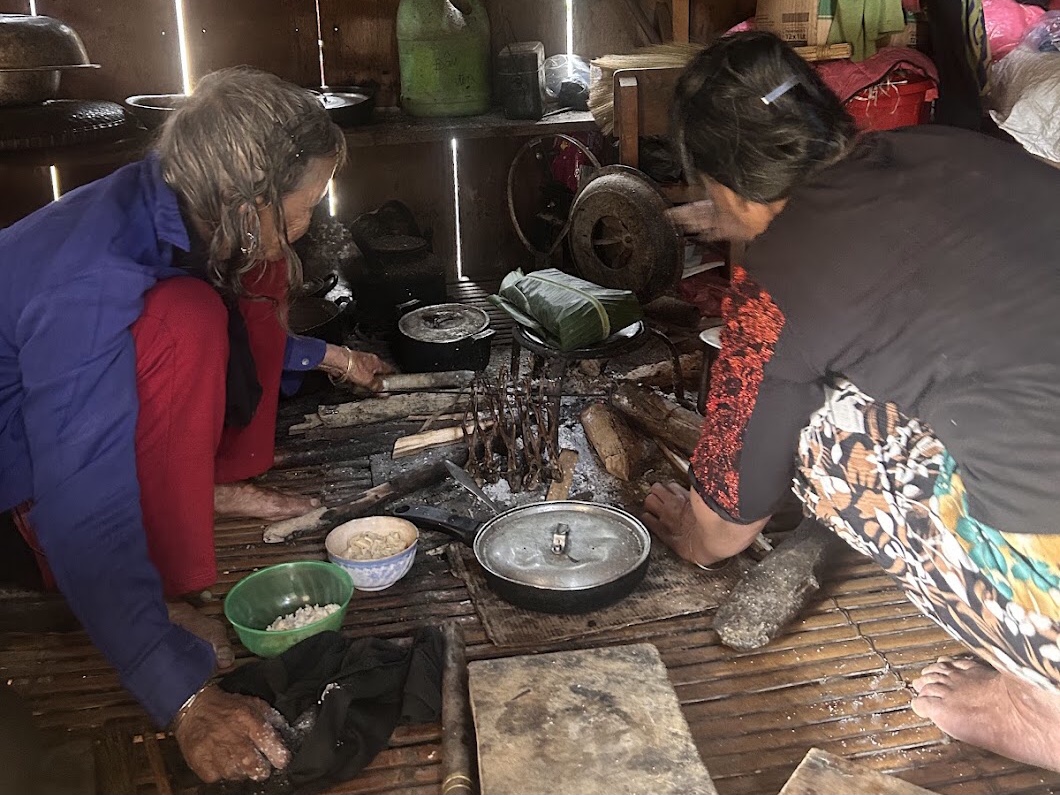
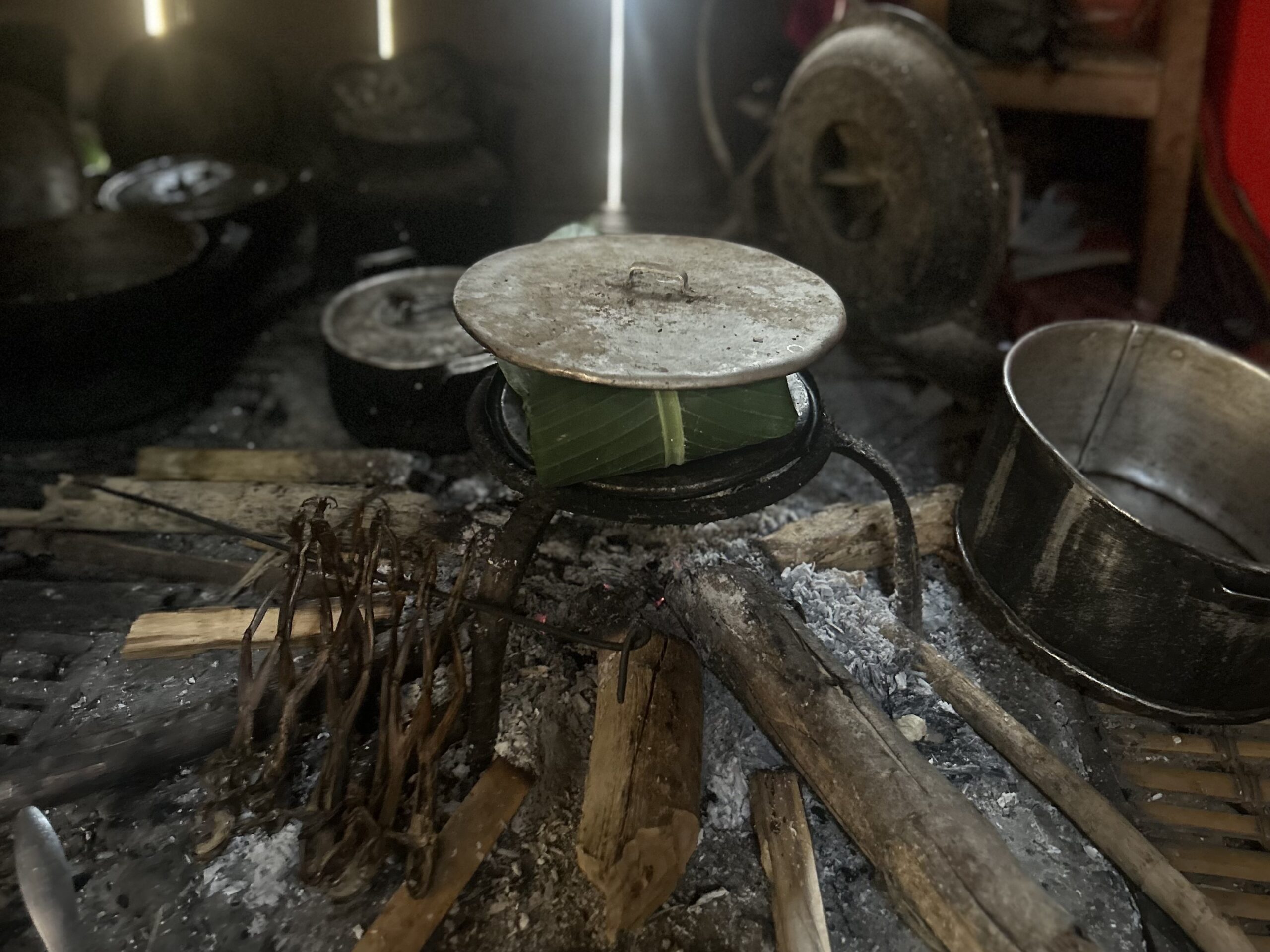
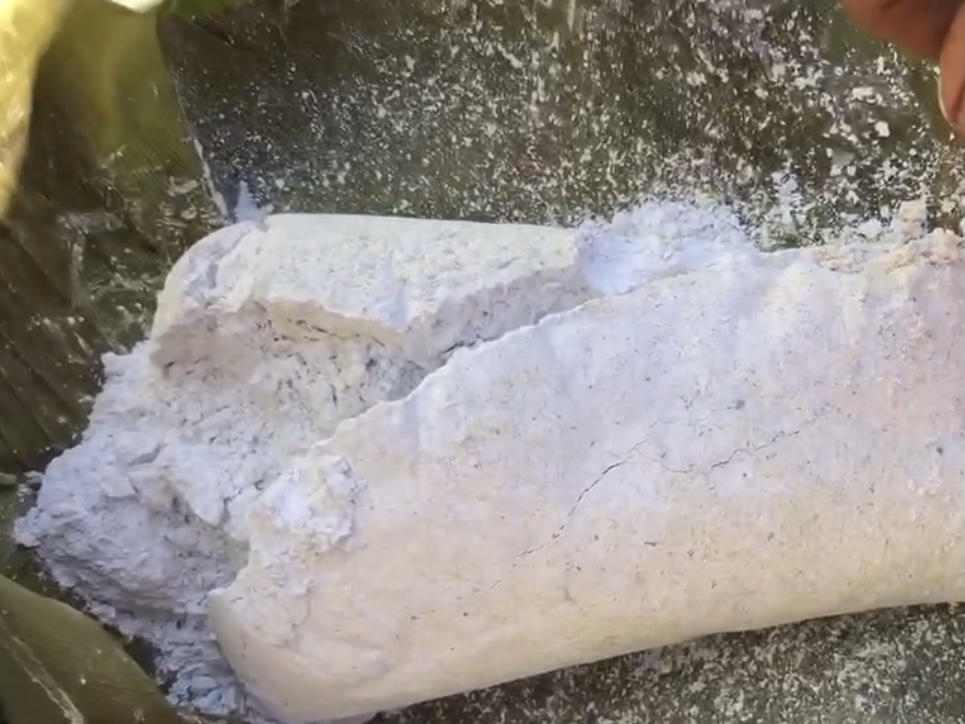
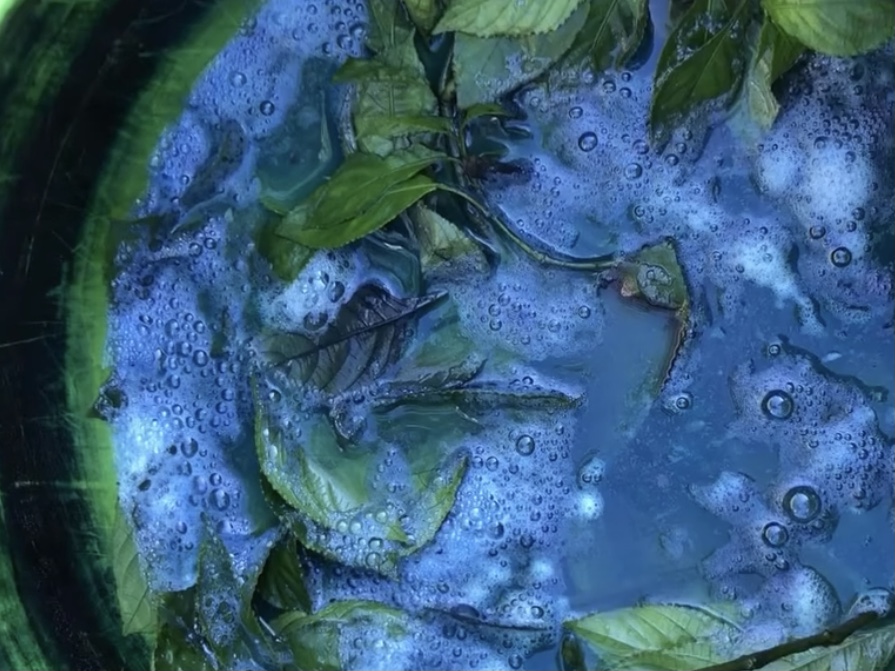
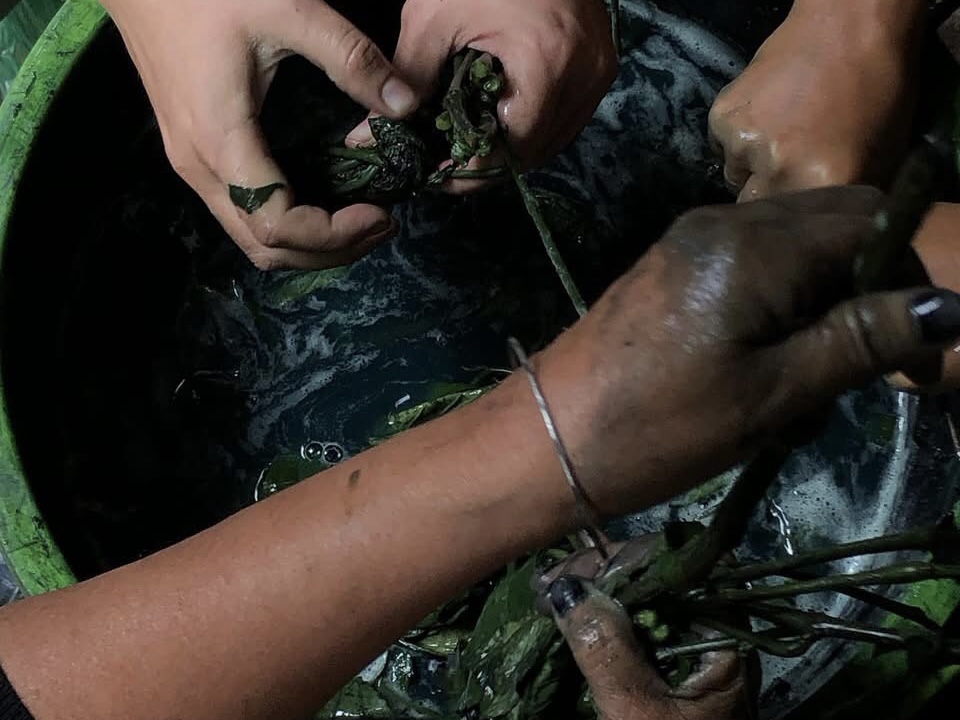
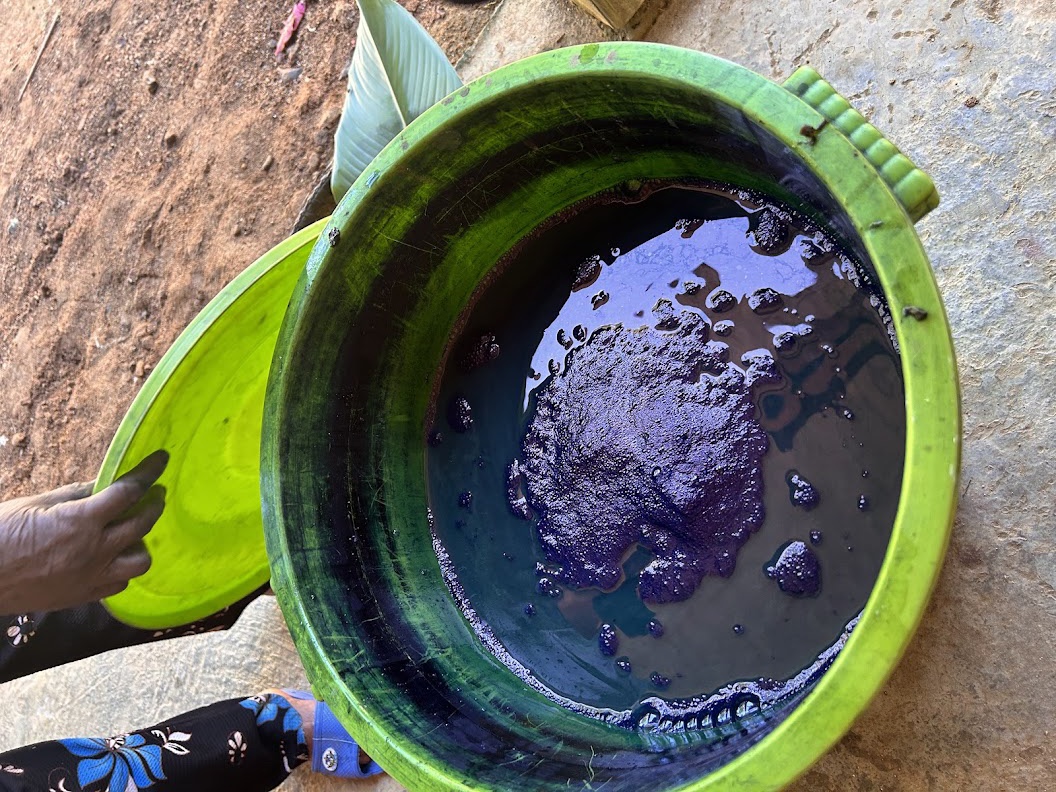
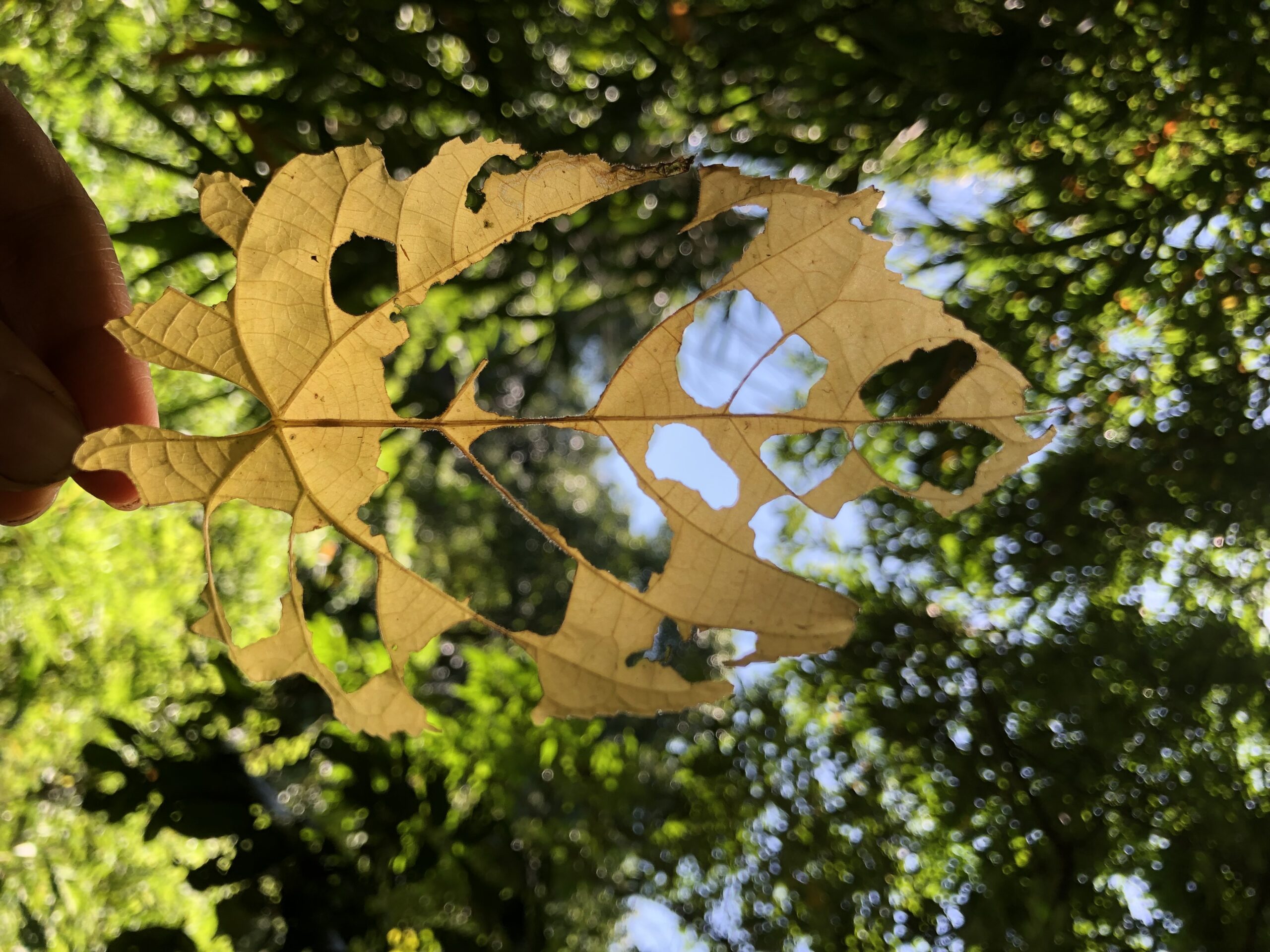
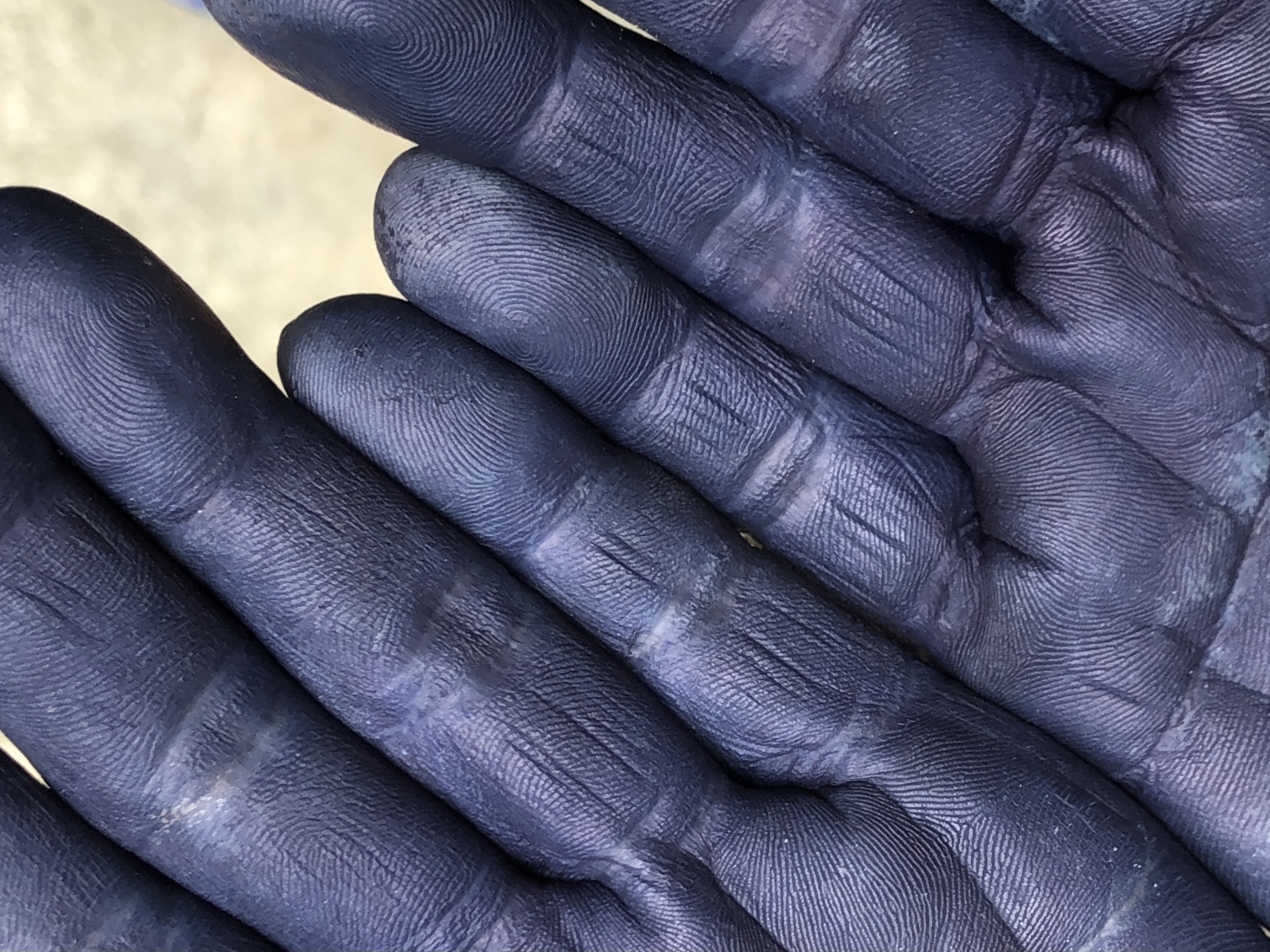
On the first day, bà Hia took me to collect indigo leaves. We washed them and put them into a large container of water. The leaves had to soak for three days. While waiting, bà Hia prepared the snail shells. The shells were usually collected from the stream. People ate the snails and kept the shells. On the second day, My and I followed bà Hia into the forest to burn the shells on bamboo tubes. As soon as we entered the forest, a piece of bamboo scratched my toe and it started bleeding. Bà Hia told My to urinate on my toe. Then she held my bleeding toe and chanted something in Cơ Tu. I asked My what her grandmother was saying. My hesitated. I thought perhaps I had entered the forest without asking permission. Maybe bà Hia was asking permission for me. So I quietly said to myself: “Forest spirits, mountain spirits, please allow me to be here.” The bleeding stopped, and I continued walking. Bà Hia cut bamboo and arranged the pieces into layers. She spread the snail shells over them and set them on fire. We waited until the shells had completely burned, then collected them into a basket. The black shells turned completely white after burning. Back at the house, bà Hia sorted them and removed the shells that were still black. She then crushed the shells into a fine powder, almost like ash. After preparing the shell powder, she made ash water. She took ash from the wood-burning stove, mixed it with water, and left it overnight so that the ash could settle. She then filtered the water several times until it became clear. Every day, she checked the indigo leaves to see how much they had broken down. She said that after three days, the indigo would be ready for dyeing. At the same time, she prepared the cotton thread. She pulled the thread from the tube and stretched it out to prepare the warp. Bà Pá, together with bà Hia’s two daughters, Ot and Yen, and her daughter in law, Thuan, helped her stretch the threads. Bà Hia and bà Pá heated leaves over the fire and used them to tie sections of the warp threads. These tied sections would resist the indigo dye and remain the original colour of the cotton. Depending on how the threads were tied, different patterns would appear. Bà Hia and bà Pá talked together and discussed how to tie the threads so that the pattern would be beautiful.
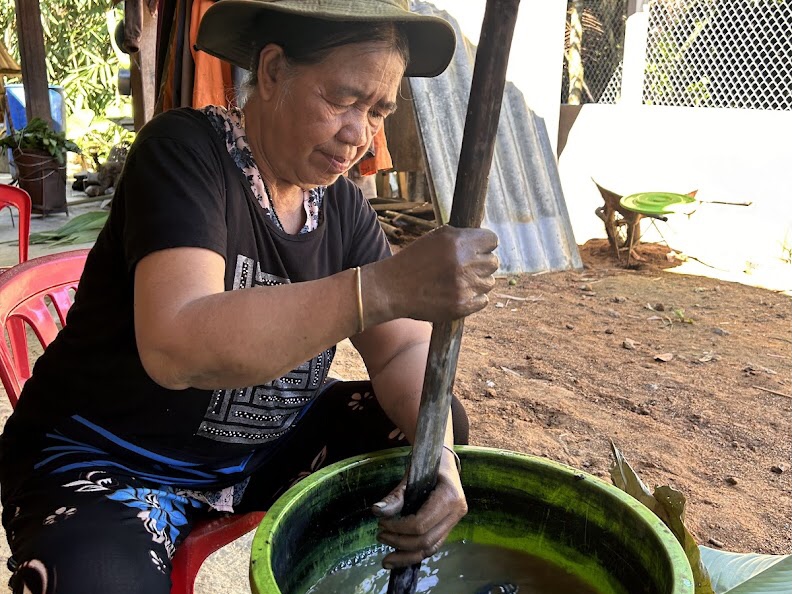
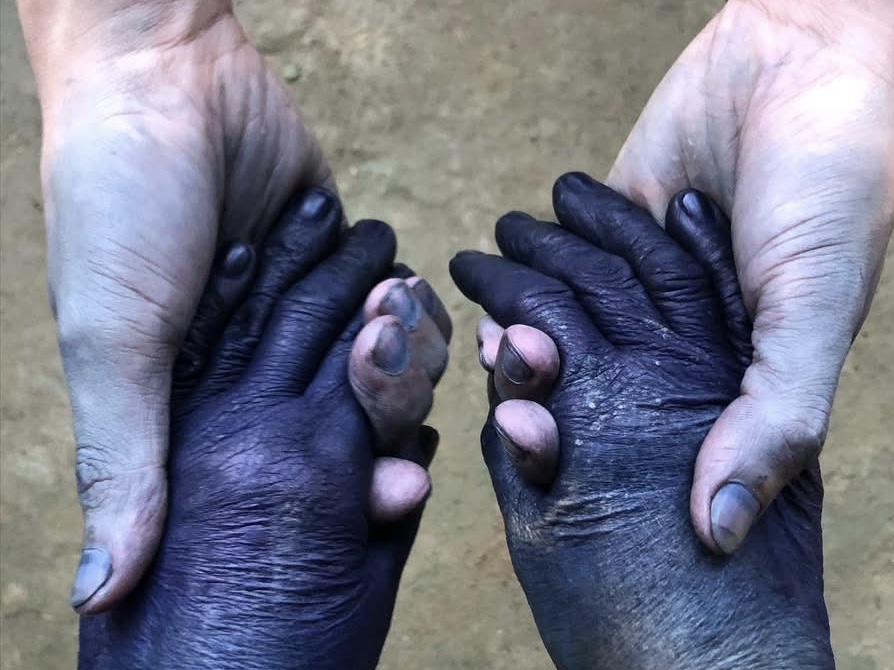
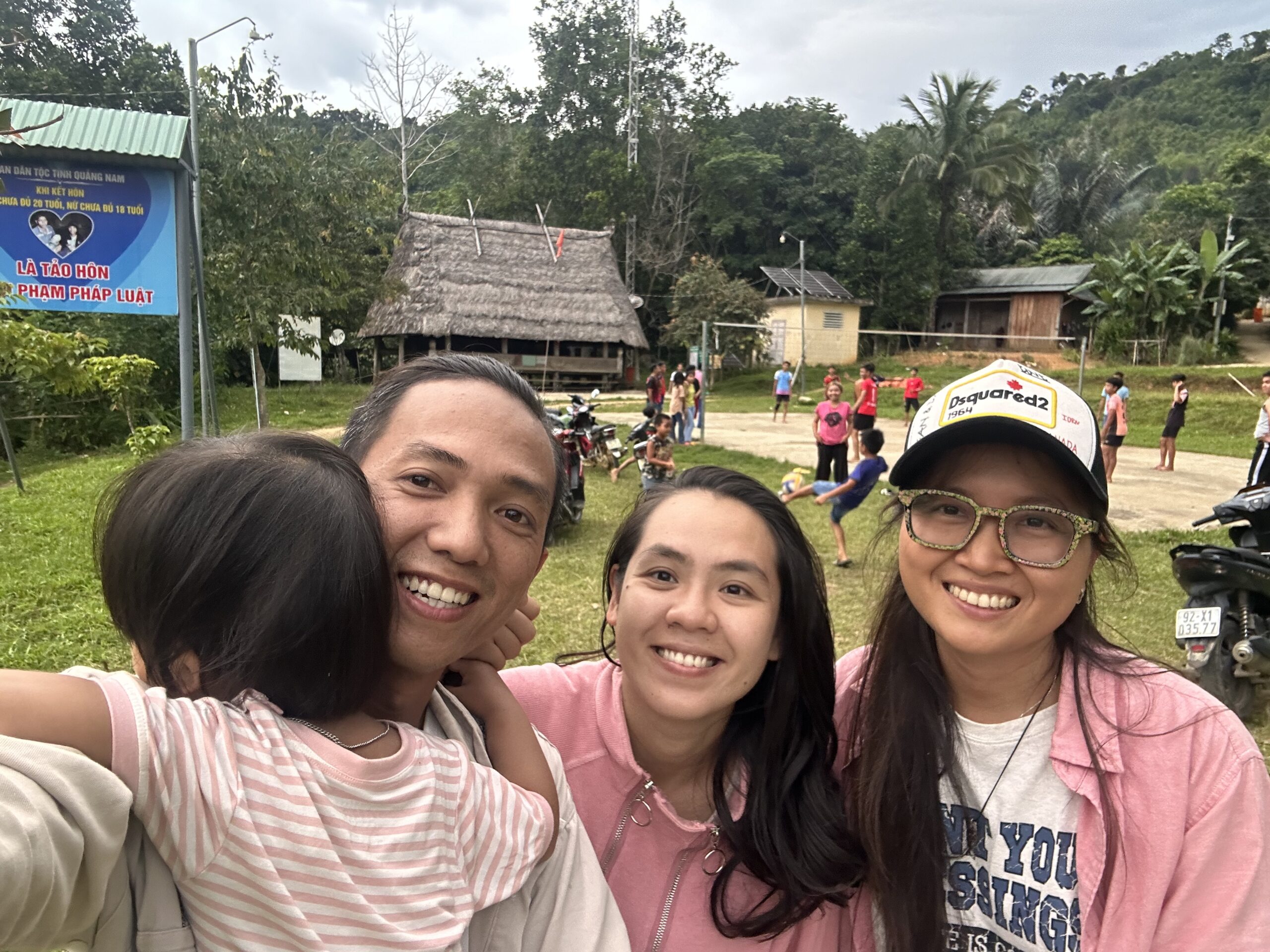
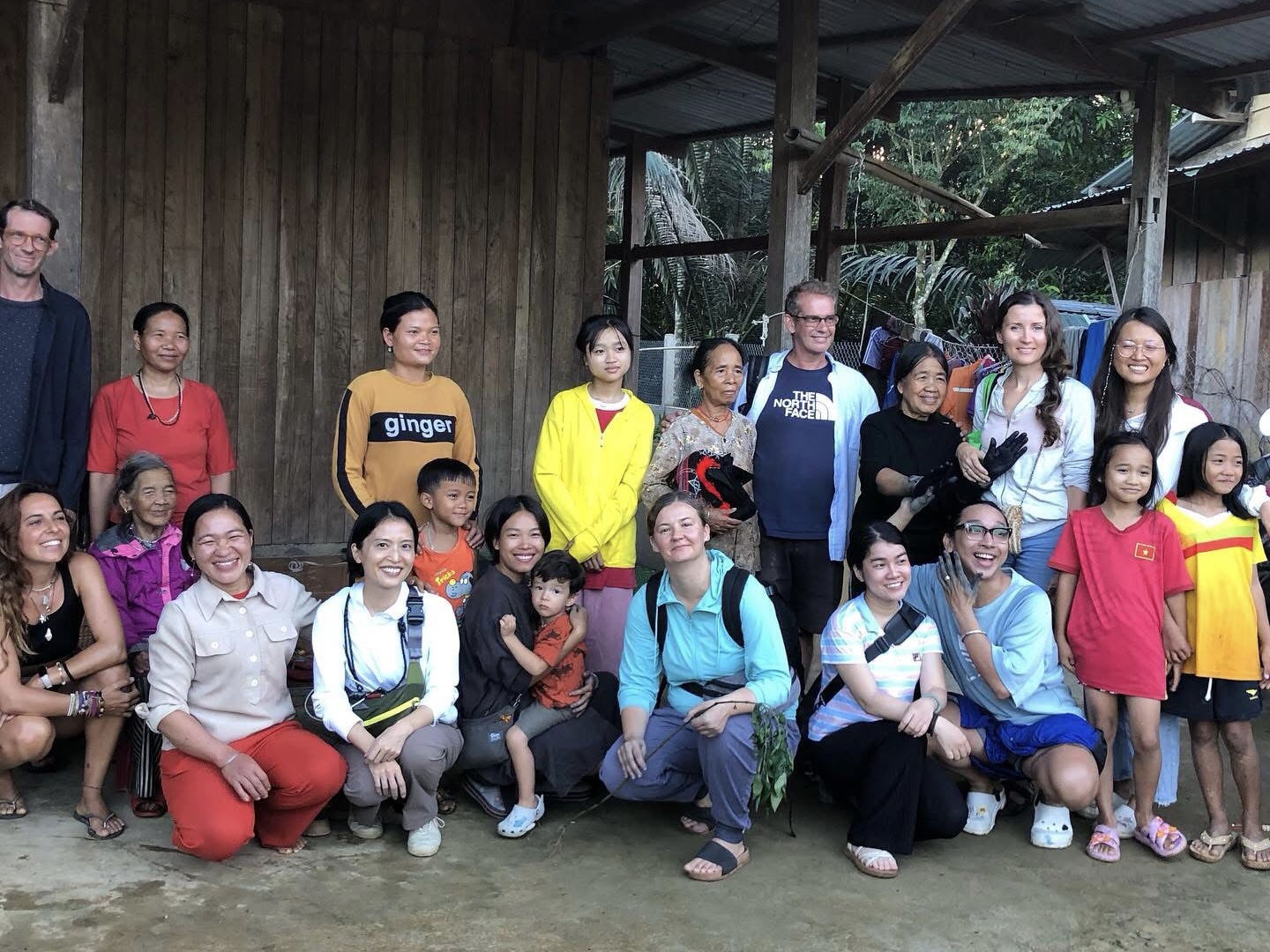
When I realised that the indigo would actually be ready for dyeing, I contacted the others in our team and told them that, if possible, they should come and see it. On the third day, Thang and his wife, together with their young daughter, managed to travel by motorbike from the morning and arrived around noon. That afternoon, they were able to see bà Hia dyeing the cotton. Everything was ready. The indigo leaves had broken down. Bà Hia removed the leaves and mixed the liquid with clear wood-ash water and the crushed snail-shell powder. Then she stirred it. As she stirred, she chanted again in Cơ Tu. I could not understand her words, but I had the feeling that she was talking to the indigo vat, asking it to take the colour well and produce a beautiful blue. It felt as if there was a spirit inside the vat. Then bà Hia dipped the threads into the indigo. She dyed them again and again, taking them out and drying them between dips. When the dyeing was finished, we were all so happy. We had done it. We were lucky. For all three days of preparation, the weather had stayed dry. After we finished dyeing, there were only a few drops of rain. Then suddenly, the sky became bright again. I ran outside to see if there would be a rainbow. And there it was. A double rainbow. What a miracle. I ran back inside and called everyone. I called bà Hia, My, Thang’s family, and everyone came outside to look at the rainbow. The scene that day was incredibly beautiful. We walked around the village. The children were playing sports, kicking a football, running and riding bicycles in the open space in front of the Gươl house. Watching them play so freely, I felt a great sense of peace.
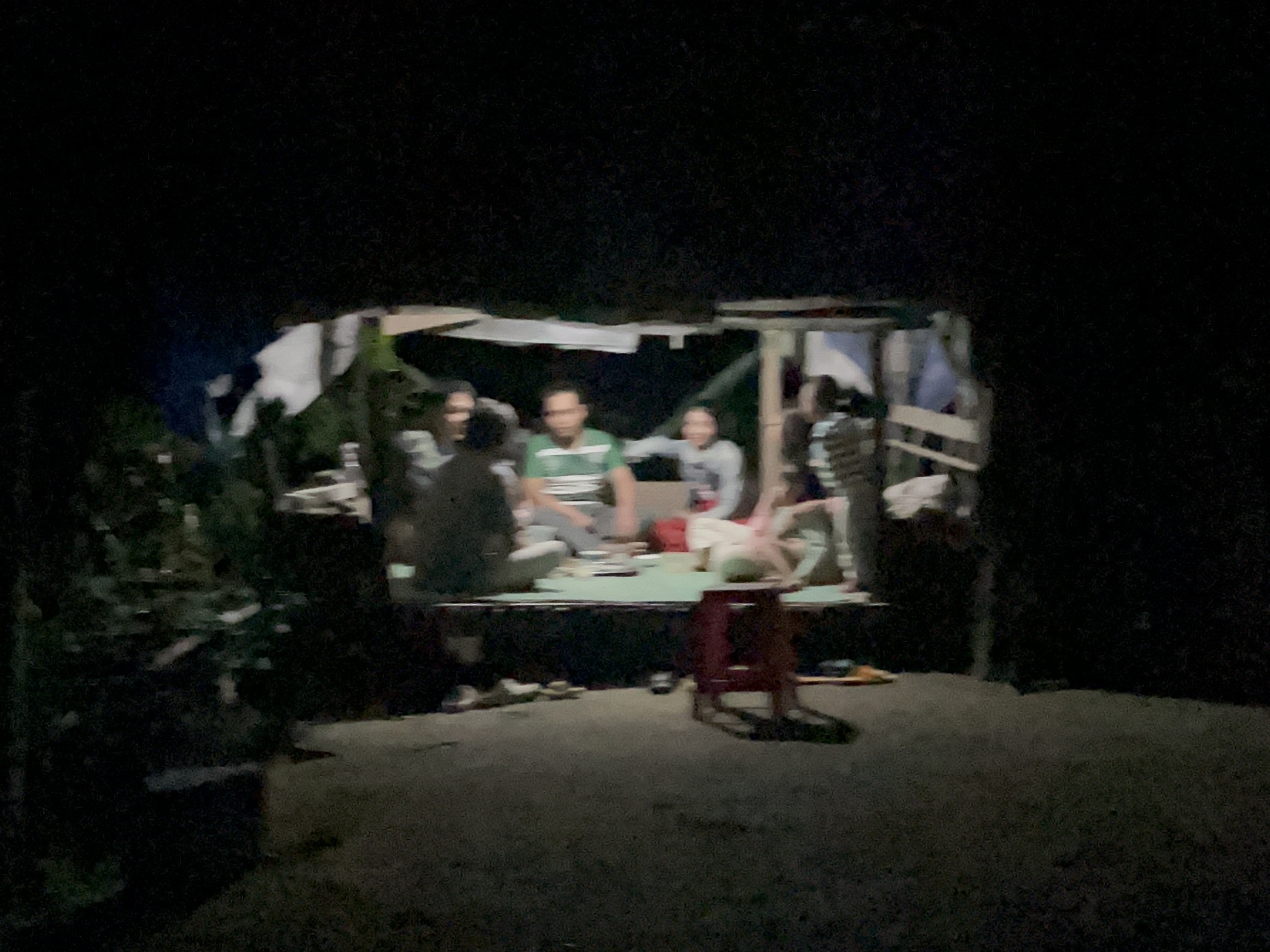
That evening, Hanh invited Thang and his family to have dinner and stay with us. One of the neighbours brought Tà Vạc, also known as “heaven’s wine” or “wine from the tree”, and offered it to us. It is not a distilled drink. It comes from the sweet liquid that naturally flows from the flower stalks or young flower clusters of Tà Vạc trees, which is then naturally fermented with some forest tree bark, such as the bark of the chuồn tree. The drink is sweet, slightly bitter and fragrant. That afternoon, Hanh had also collected leaves to prepare her traditional treatment for a guest. There were still some leaves left in the evening, so she heated them and applied them to us to help our bodies relax and ease the aches from the long journey. The leaves smelled wonderful. The warmth from the freshly heated leaves made my body relax. That night, the sky was beautiful too. The moon was bright. We sat together under a little thatched shelter outside the house, talking and laughing. The next morning, we said goodbye to bà Hia and Hanh’s family and returned to Hoi An. We promised to meet again when the next workshop tour took place.
The Gratitude
After that trip, the project suddenly moved forward. I was able to complete the video about Cong Don with the help of Thuan, who sent me an additional video of bà Hia weaving ikat. Manh completed the video about Dhroong and Brohoong. The postcards were printed using photographs taken by Phuc and Thang. Quynh completed a dress using the bead-woven fabric from the Dhroong group. And we had two pieces of ikat fabrics from Cong Don. Phuc helped me install the showcase at Rainbow Art & Cafe and stayed until four in the morning to finish it. Looking back, actually completing the showcase and the three-day, two-night workshop tour felt like a small miracle in itself. The project reached that point because so many people gave their time, energy and kindness. Thank you to bà Bling Hia, who showed me things I had never seen before. Thank you to Hanh and Hien, who opened their home to me and helped me without asking for anything in return. Thank you to all the people I met, all those who connected us, supported us and travelled with us along the way.
Two years later, everyone has gone in different directions. There are people I have not seen or spoken to for a long time. It has been two years since I last returned to Cong Don. I still visit Dhroong about once a year, but the question of bringing cotton and indigo back into everyday practice there is still open. Writing this memory down has made me realise how much I have already forgotten. So I called Thuan again to contact bà Hia, and I contacted Hanh as well to ask what they thought about the things I wanted to share, and whether there was anything I should change. I know that people trusted me with many personal stories and things that are not normally shared with outsiders. But I also know that before telling these stories publicly, I need to ask for their consent. And thank you to the person who sent me that message about the Cong Don video and chose it to be shown in the exhibition. That message gave me another reason to sit down and write this journey. Perhaps some journeys are not finished when we leave a place. Sometimes, they stay with us quietly for years. And sometimes, a small message, a piece of old footage, or a memory that suddenly comes back is enough to bring us there again.
📸 Photos taken by Nguyen Huyen, Quang Thang, Phuc Phuc during the field trips and workshop tour in Cong Don village, Quang Nam province, 2024